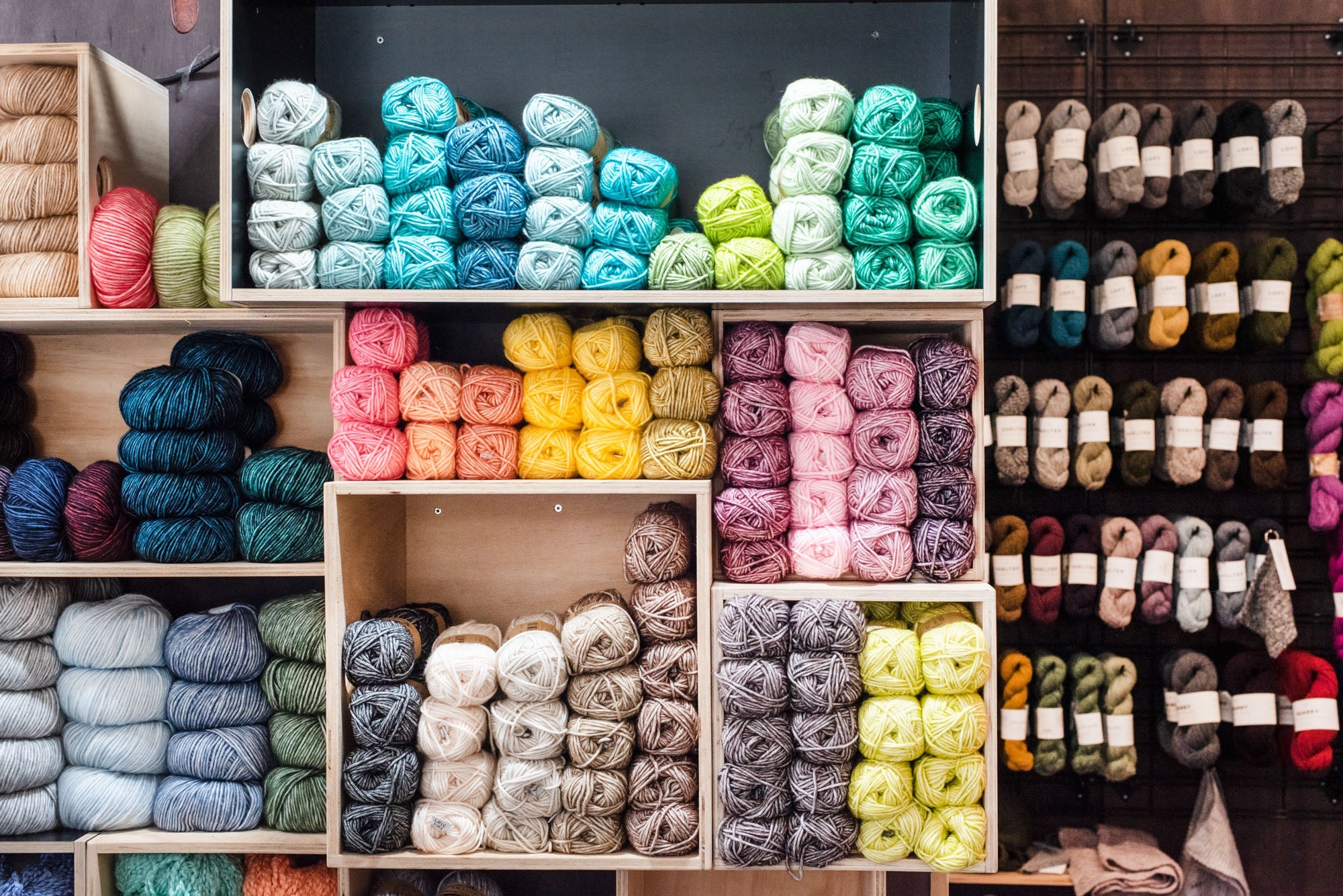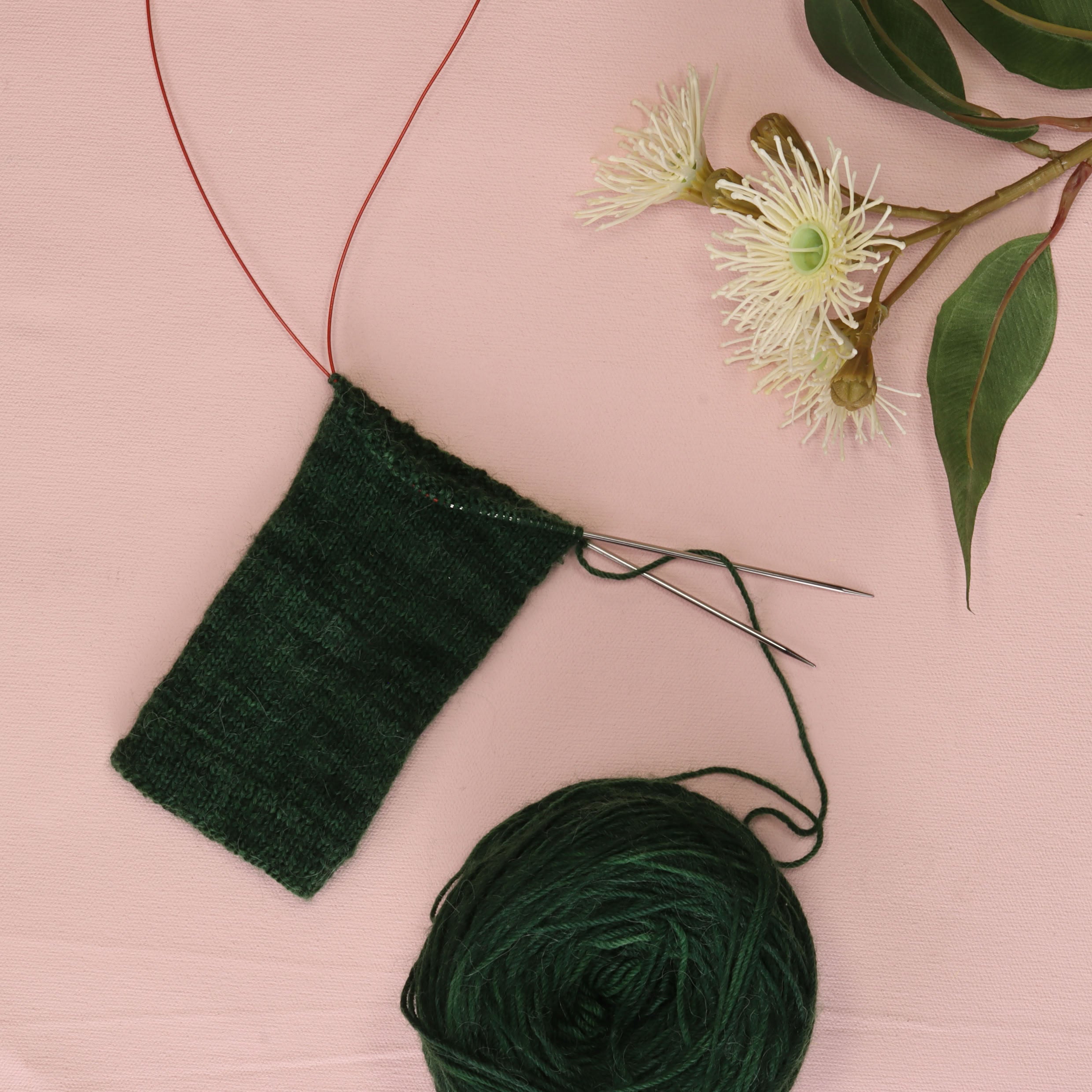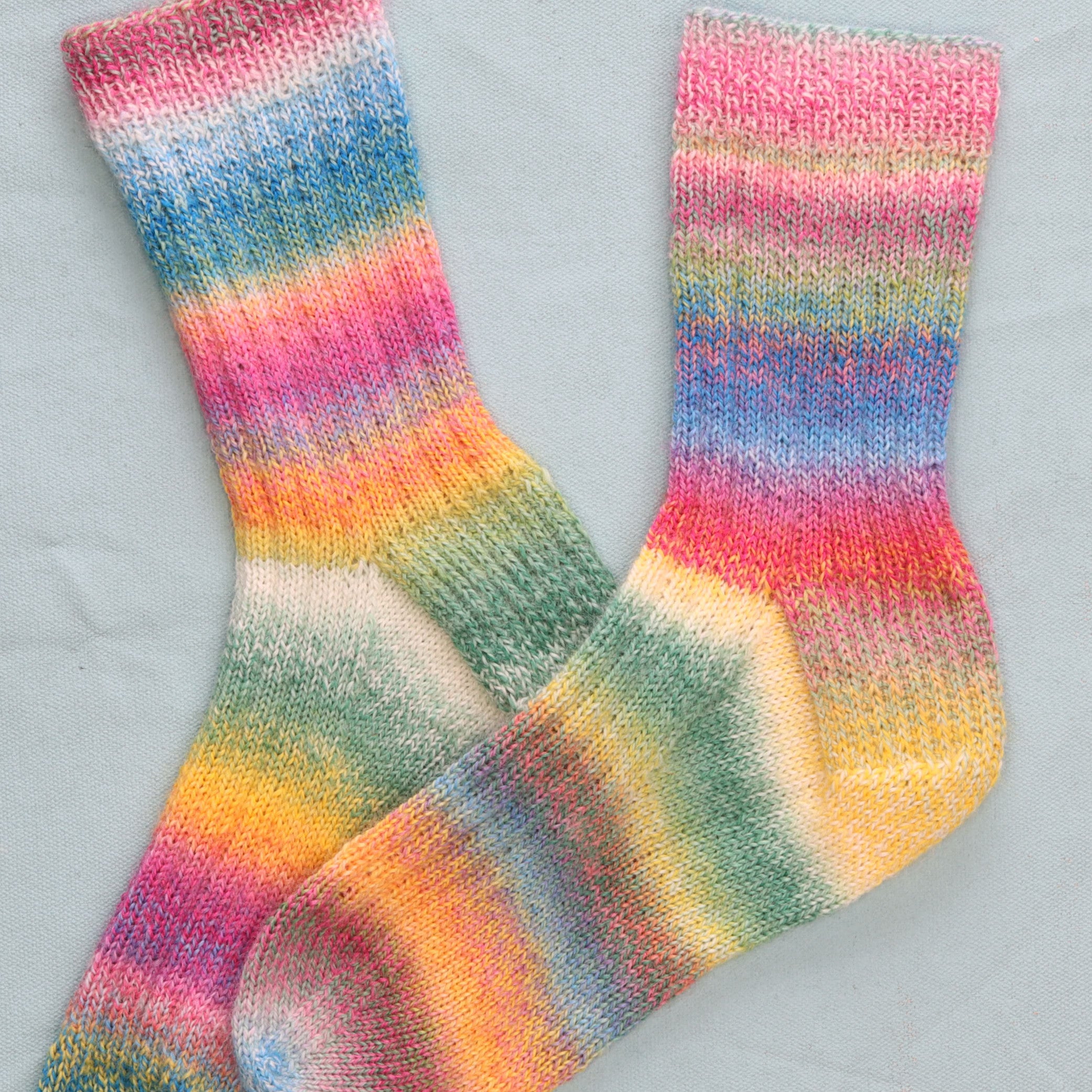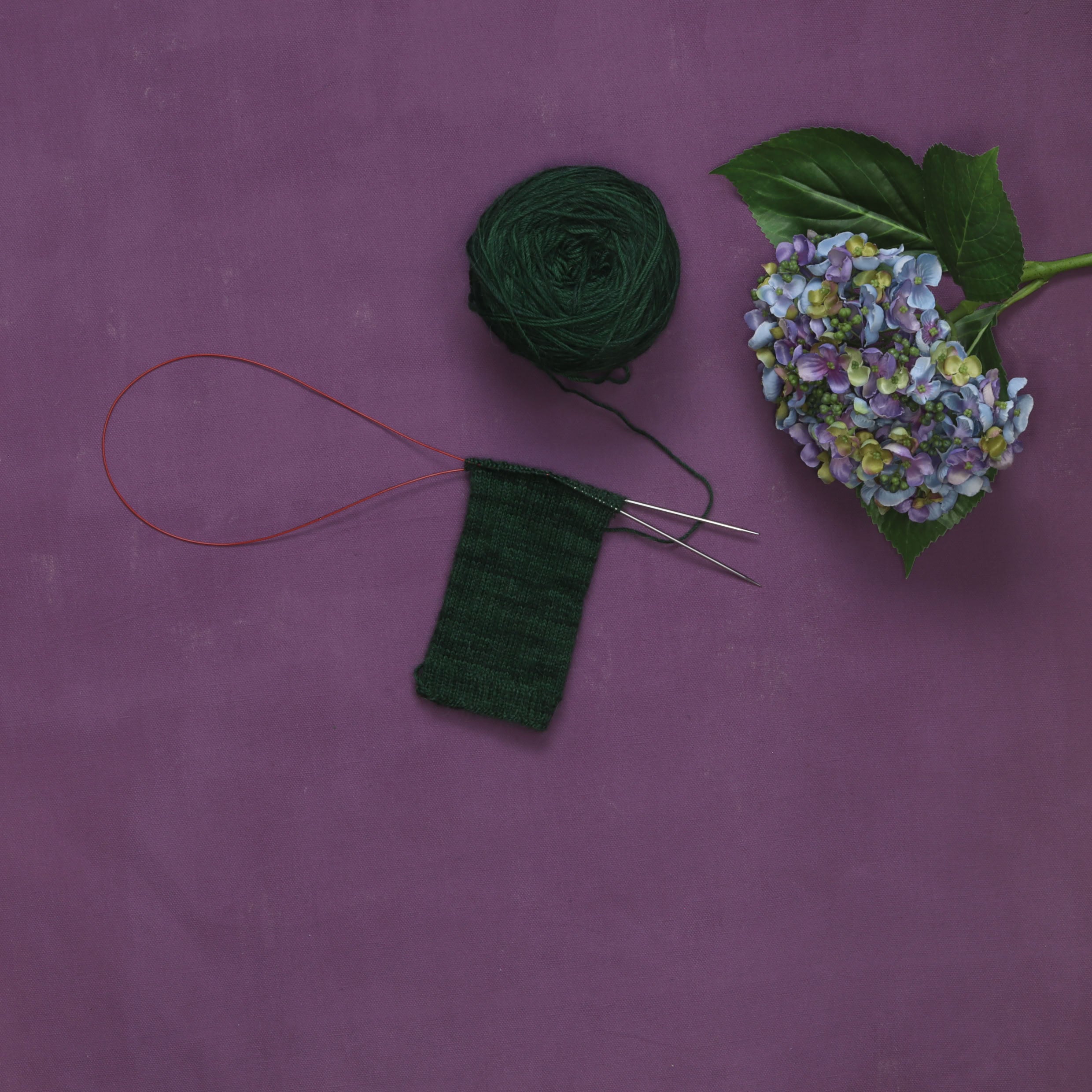
Almost every week, someone stands in front of our needle wall and says a version of the same thing: 'I just want a pair of knitting needles. Why is this so complicated?'
It's a fair question. If you learned to knit on a pair of long straight needles and you've come back to it after a few years away, the wall is a shock – circulars in a dozen cable lengths, interchangeable sets in zipped cases, little short ones for socks. So here's the answer we'd give you across the counter.
The short answer: most knitters today are best to start with circular needles, and the most useful size to own is an 80cm circular in 4mm – 5mm. It handles a jumper, most shawls, and with the magic loop method it does sleeves and socks as well.
What changed?
Circular needles used to be the thing you bought especially for small circular projects like hats. Now they're what most of us reach for all the time, for flat knitting as much as knitting in the round. There are three reasons, and none of them is fashion.
The first is comfort. On straight needles the whole weight of your project hangs off the ends of two sticks held in your hands, and your wrists take all of it. If your hands or shoulders ache after an hour of knitting, that's usually why. On a circular the weight sits in the cable in your lap rather than out at the end of the needle, so there's nothing to hold up.
The second is capacity. A straight needle only holds so many stitches. A circular holds as many as you like, which is the difference between knitting a blanket in one piece and knitting it in sections you then have to sew together.
The third is what it lets you make, and this is the one that surprises people. Knitting in the round opens up a whole way of building a garment. You can knit a jumper from the top down: start at the neck, travel down over the shoulders, split the work to put the sleeve stitches aside, keep going down the body, then come back and knit the sleeves. Not a single seam to sew at the end.
And because you're working in the round, stocking stitch is made entirely of knit stitches. No purling at all. Most people much prefer the knit stitch, so it's faster and far more relaxing, and it makes colourwork enormously easier. We watch people's faces when this lands – they genuinely can't quite believe it.
The four types, and what each is for
Straight needles
Two long needles, a point at one end and a stopper at the other, usually made in wood, bamboo or metal. They only do flat knitting – back and forth, turning at the end of each row – but they need no setting up, they're inexpensive, and there's nothing to go wrong. The other thing to know is that there are two of them, so there are two to lose. Browse straight needles.

Fixed circulars
Two short tips permanently joined by a cable. One needle, one length, and it can never come apart on you mid-row. The catch is that every new size and every new length means buying another whole needle, so a drawer full of them adds up faster than you'd think. Browse fixed circulars.

Interchangeables
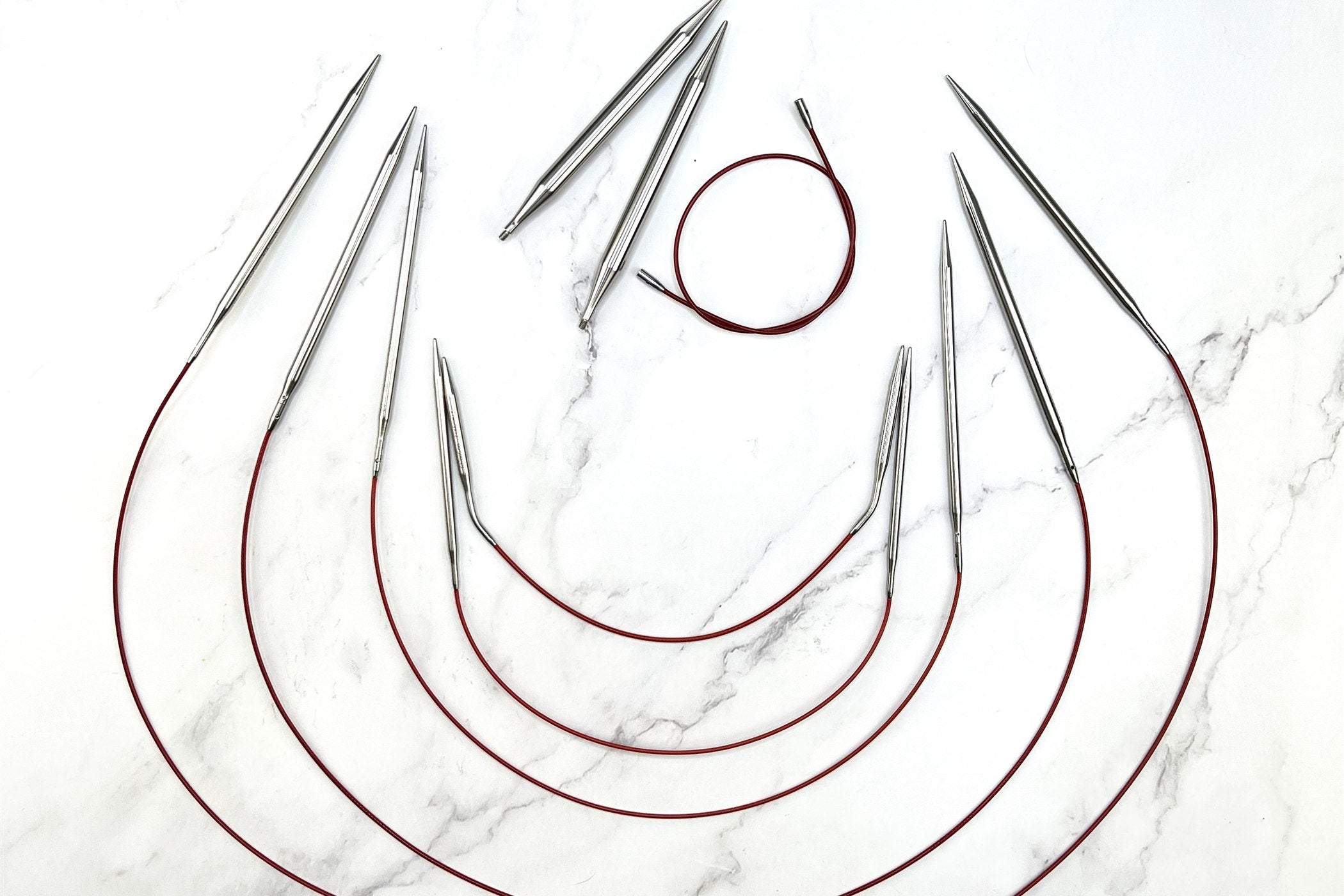
Tips and cables that screw together, so one pair of tips works with every cable you own. You build the needle the pattern asks for, then take it apart and build a different one. This is what most of our regulars end up using. Browse interchangeables, or look at the sets if you want to buy into a system properly.

Double pointed needles
Sets of four or five short needles with points at both ends, for knitting small tubes – socks, sleeves, gloves. They look alarming and they aren't, though some people never warm to them. The main thing to watch for is 'ladders', where stitches loosen at the point you swap from one needle to the next. Browse double pointed needles.

Whether they're fixed or interchangeable, the range of cable lengths is what gives circulars their reach. They start at 23cm for baby clothes, socks and mittens, run through 40cm for beanies and sleeves, 80cm for jumpers and shawls, and go all the way out to 1.5m for blankets. There is a length for almost anything you could want to make.
So what should you actually buy?
It depends entirely on what you're making, so here's the honest version – because if we're not being honest with you, we're not being true to ourselves either.
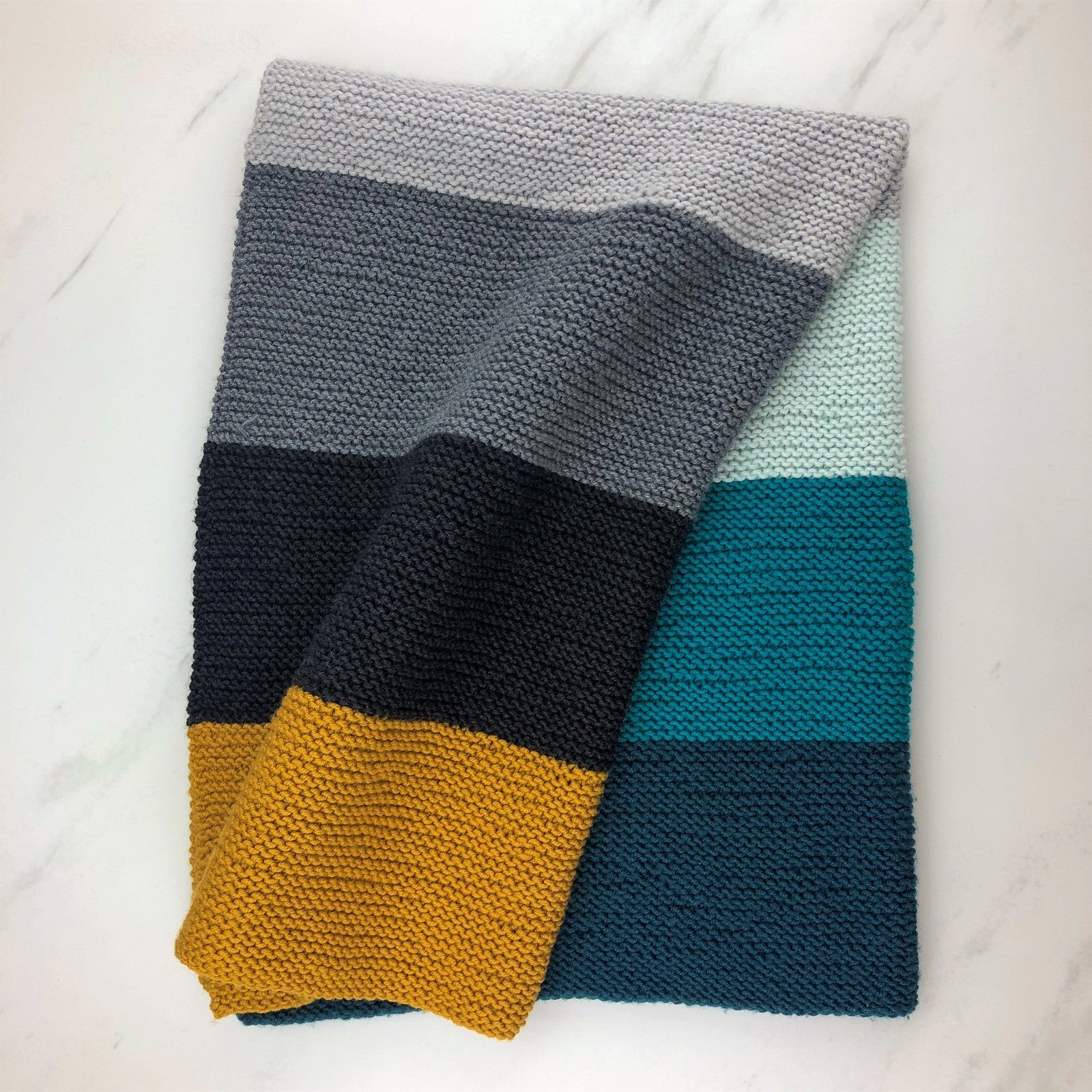
Your first flat project – a scarf, a simple wrap, a baby blanket. An 8 ply or 10 ply yarn on a 4mm – 5mm needle is the easiest place to start: thick enough that your hands find it easy to hold the yarn, and the stitches are obvious and easy to form. Straights are a great choice here, and our beginner knitting needles collection is exactly this. Our Garter Baby Blanket Kit is a lovely first project – all garter stitch, and everything you need in one box.

But if you're at all unsure whether to start on straights or circulars – and especially if it's been a long time since you knitted, or this is your first go – go straight to circulars. They're more comfortable to use and kinder on your hands, which matters a great deal if you have arthritis or your hands get sore. It's best to start on the method you're going to carry on with.
A jumper, a cardigan or a shawl. An 80cm circular. If you buy one circular needle in your life, buy this one – it's long enough for the body of a jumper in the round, most shawls, and magic loop for sleeves and socks. In interchangeables that's a 55cm cable plus 13cm tips, which comes out at roughly 80cm all up.
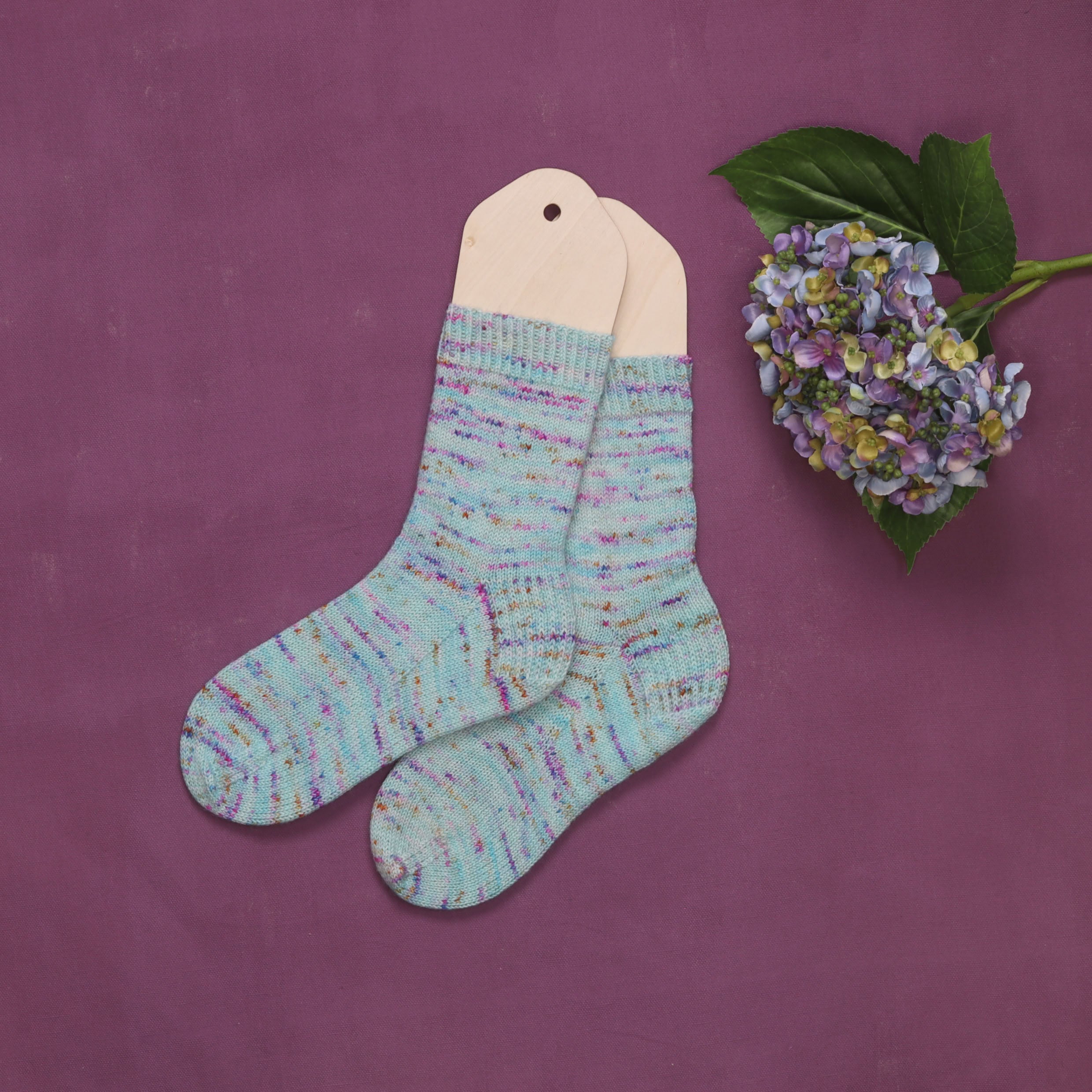
Socks and sleeves. Either double pointed needles, a very short circular, or magic loop on that same 80cm. Worth knowing before you buy: at very short lengths you can't use standard 13cm tips at all – a 40cm needle can only be built from 10cm tips and a 20cm cable.
If you already know you're hooked on knitting. Buy a set. It costs more on the day and less over a year, and it saves the trip back to us every time a pattern asks for a size you don't own – or when you're swatching and need to try a size up and a size down to get your tension right.
Which set should you buy?
Sets come in different size ranges, so the first thing we ask is what sort of knitting you actually do. Fine work on small needles, or big chunky projects?
Most people start out around 4mm, so unless you already know otherwise we'd point you at a Small set – roughly 2.75mm up to 5mm. It covers nearly everything a beginner or an intermediate knitter reaches for, and the case has room to add the bigger sizes later as you need them, one tip at a time.
If you only ever knit chunky, go for the Large set instead, around 5.5mm up to 10mm. And if you know you knit right across the range, the Complete set runs 2.75mm to 10mm and saves you buying twice. Have a look at the sets.
One last thing, and it's the opposite of what most people expect us to say: there is nothing wrong with owning more than one needle in the same size. Once you're properly hooked you'll have several projects on the go at once, and leaving the right needle in each project bag is far better than pulling it out of one thing to use on another – and then forgetting what size you were on. I have something like five sets of 3.75mm needles, and I regret none of them.
Steel or bamboo?
This is personal, but there's a rule of thumb. Stainless steel tips are slick and fast – they grip the stitch and then let it slip away, and most people knit quicker on them. Bamboo is smooth but has a little more grab, which is exactly what you want with a slippery yarn like linen or silk, or if you're new and stitches keep sliding off.
Neither is better. If you're buying your first circular and you can't decide, steel is the safer default for wool.
There is one practical limit worth knowing about, though. Wooden and bamboo tips can't be made in the very small sizes – they'd simply snap. The smallest KnitPro Symfonie interchangeable tip you can buy is 3mm, so if you're working at a finer gauge than that, socks being the obvious case, you need metal. It isn't a preference at that point, it's the only option.
A word on brands, and one trap
We stock ChiaoGoo in full and it's what we reach for ourselves – the steel tips are lovely, the Red Cables never kink, and they carry a lifetime guarantee. They are premium, and we know that doesn't suit every budget.
KnitPro does the same jobs for less and we stock a great range. They've recently brought out a new non-kinking cable – plastic-coated metal – which genuinely rivals the ChiaoGoo Red Cable. There are some fantastic choices in KnitPro as well as ChiaoGoo, so don't feel the more expensive option is the only good one.
The trap, and it catches people out constantly: interchangeable systems are not compatible between brands. ChiaoGoo tips don't fit KnitPro cables. So when you buy into a system, pick one that sells spare cables and extra tips separately, and stay with it. Starting again in two years because you can't buy one more cable is an expensive lesson.
One more thing about cable length
Always aim for the cable to be a little shorter than the thing you're knitting. If your jumper finishes at 95cm around, use a 60cm or 80cm cable, not a 100cm. Stitches bunched up on a slightly short cable are easy to work with. Stitches stretched around a cable that's too long fight you the whole way.
If you need to translate a needle size between metric, US and UK, our hook, needle and yarn guide has the full conversion chart. And if you're not sure what weight of yarn the pattern wants in the first place, start with our guide to yarn weights and ply.
Common questions
What size knitting needles should a beginner buy?
A 4mm – 5mm needle with an 8 ply or 10 ply yarn is the easiest combination to learn on. The yarn is thick enough that your hands find it easy to hold, and the stitches are obvious and easy to form, so you can see exactly what you're doing.
Can I use circular needles for flat knitting?
Yes, and most of us do. You knit back and forth exactly as you would on straights, turning at the end of each row. The cable just holds the weight for you.
What length circular needle is most useful?
80cm. It covers the body of a jumper in the round, cardigans, most shawls, and magic loop for socks and sleeves. If you only own one circular, own that one.
Are interchangeable needles worth it?
If you knit regularly, yes. One pair of tips works with every cable you own, so instead of buying a whole new needle each time a pattern asks for a different length, you unscrew the tips and put them on a different cable. You can change the length partway through a project too, which is exactly what you need when a jumper yoke grows from a neckline to a body. The trade-off is a join in the needle, which needs tightening properly, and the tips and cables must be the same brand.
Should I buy a set, and which size?
If you knit often, a set works out cheaper than buying individual needles in every size and length, and it all travels in one case rather than a drawer. Most people are best served by a Small set, roughly 2.75mm to 5mm, and adding larger tips later. Go Large (5.5mm to 10mm) if you only knit chunky, or Complete if you knit right across the range. If you knit a scarf every second winter, a couple of fixed circulars is plenty and a set would be overkill.
Do ChiaoGoo and KnitPro parts fit each other?
No. Interchangeable systems aren't compatible between brands, so choose one and stay with it.
Come and hold a few
Needles are one of those things you understand in about ten seconds once they're in your hands. If you're anywhere near Dulwich Hill, come in and try a few – we'll put a steel tip and a bamboo tip in front of you and you'll know immediately which one you like. If you're not local, tell us what you're making and we'll point you at the right thing.
Debx