Right. A confession, before we go any further.
I don't knit socks.
I know how. I just don't, and I'm fairly well known for it around here. There are two reasons. The first is that I have very large feet – I'm tall, my feet are in proportion to the rest of me, and a pair of socks is a genuinely long trip. The second is second sock syndrome, which is absolutely a real thing. It is the same beast as second sleeve syndrome. You finish one, you hold it up, you feel marvellous, and then it dawns on you that you have to do the whole thing again. I also knit with quite loose tension, and socks want a firm tight fabric that I find hard to get.
So for years I talked about socks without ever owning a hand-knitted pair.
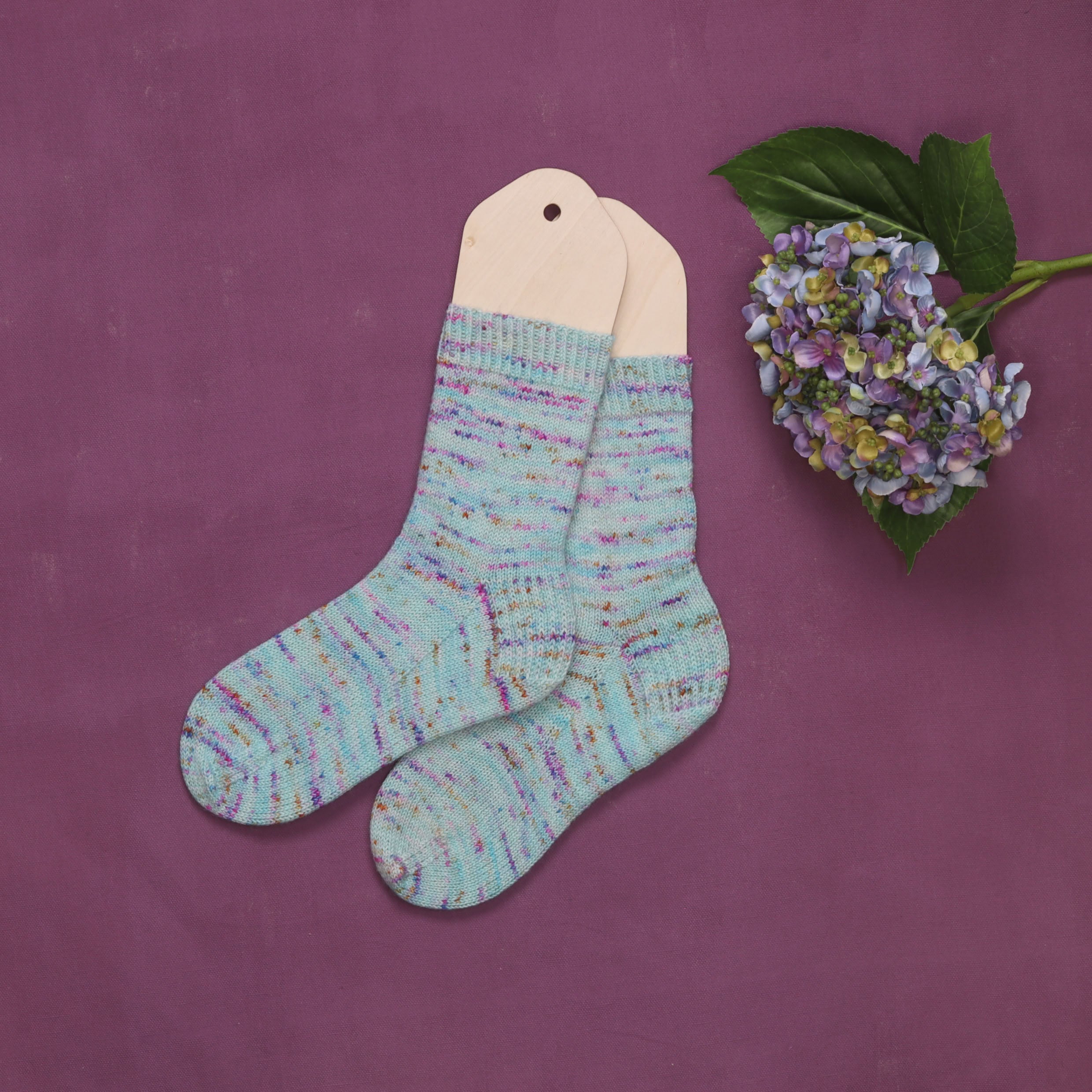
Then a couple of Christmases ago my sister Helen gave me a pair she had made for me. She knows I don't knit them for myself, and she decided I deserved to find out what all the fuss was about.
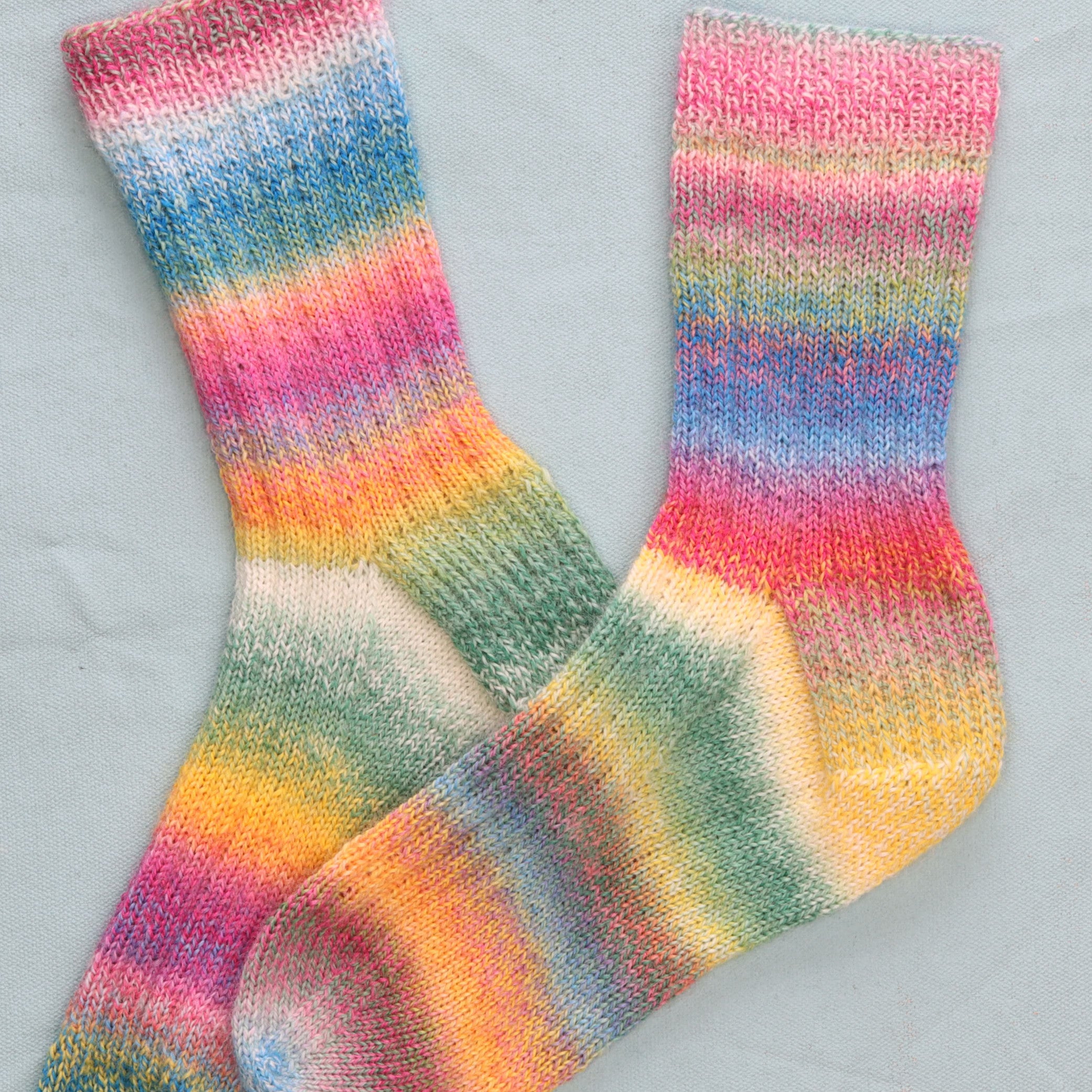
I understand what the fuss is about. They are cosy and soft and so warm, and there is something lovely about having hand-dyed yarn on your feet. That she sat down and made them is the best part of it. It is pretty special when somebody knits something for you.
I understand what the fuss is about. They are cosy and soft and so warm, and there is something lovely about having hand-dyed yarn on your feet.
Why we love socks
When someone comes into the shop wanting to knit socks, we light up a bit.
Part of it is that a sock is such a beautifully portable project. It lives in your handbag or a little project bag, and it comes out whenever you have a spare few minutes – on the bus, in a waiting room, in front of the television. A couple of rows here and there and a sock appears.
They are also wonderful to knit in summer. A jumper sits across your whole lap and cooks you. A sock is a small thing in your hands, so you can keep making right through the warm months and come out the other side with something luscious and cosy waiting for winter.
Yarn first, or pattern first?
Like most projects, there are two ways in. Some people fall for a yarn and go looking for a pattern to suit it. Others find a pattern they love and come in to choose yarn for it. Neither is more correct than the other, and you'll probably do both over time.
What we do ask first is whether you've knitted socks before, and how you're getting on with knitting generally. Not to be gatekeepers about it – it just changes what we point you at.
You need to knit in the round
This is the one genuine prerequisite. A sock is a tube, and a fairly narrow one, so it is knitted in the round rather than flat.
There are two common ways to manage a circumference that small. Magic loop uses one long circular needle, with the cable pulled out in a loop at each side. Double-pointed needles spread the stitches over three or four short needles with a fifth doing the work. Some knitters swear by one and won't touch the other, and plenty of people use both depending on the day.
If none of that means anything yet, that is completely fine. It is a technique, not a talent. It is exactly the sort of thing our beginner knitting classes and the Sisters' Help Clinic are for. Our guide to which knitting needles to buy goes through magic loop and double-pointed needles in more detail.
On size: most 4ply sock yarn is knitted somewhere around 2.25mm to 2.5mm, which is finer than people expect and is the point. A firm dense fabric wears far longer than a loose one, so socks are knitted tighter than you would knit almost anything else. If you are a loose knitter – and I am – you may need to go down a size from whatever the pattern says to get there.

Top down or toe up?
There are two directions you can knit a sock, and it is worth knowing both exist before you pick a pattern. Top down starts at the cuff, works down the leg, turns the heel and finishes at the toe. Toe up does the reverse.
I asked three of the sock knitters here which they prefer and got three different answers, so do not let anybody tell you there is a correct one. The short version:
- Toe up lets you try the sock on as you go, so you stop when the foot fits rather than hoping. It also solves the running-out-of-yarn worry - weigh your ball at the start, work out what half of it comes to and stop the first sock when you reach that number. My sister Helen knits this way, because our family have big feet and she would rather measure than guess.
- Top down starts with a stretchy cast on at the cuff, which matters more than you would think if you are knitting for a high instep. It is also the traditional route and the one most older patterns use. Olga and Janine both work top down.
Is one genuinely easier for a beginner? I asked Helen and Olga and they both said no. In Olga's words: "whether you're starting toe up or top down, you still have to think about the construction. It's much of a muchness."
For a first pair, pick the pattern you like the look of and knit it in whatever direction it is written. There is a lot more on this - including how each of the three chooses, and a table to help you decide - in top down or toe up socks.
A word about the heel
The heel is the part everybody worries about, and it is genuinely the most interesting bit of a sock. Your pattern tells you which heel it wants, and for a first pair that is all you need to know. Follow it stitch by stitch and trust it.
One thing does make a real difference, though, and it is not which heel you knit. It is whether you can see it. Olga's advice, after years of teaching people over the counter, is to choose a pattern with photographs of the heel rather than one that describes it in words alone. She had no diagrams when she learned, and she says the trouble was never the stitches - it was not knowing which direction she was going.
The other piece of advice, which came up twice without prompting: do the heel in one sitting, when you are not tired. Both Helen and Olga set aside a clear half hour for it rather than picking it up on a bus, because it is the one part of a sock where losing your place costs you.
There is far more to say - which heel to learn, what to do when a small hole appears at the corner, and whether you should knit both socks at once to outwit second sock syndrome. It has a post of its own: which sock heel should you knit.

Olga's own suggestion for a first pattern: I'm So Basic Socks by Summer Lee - almost every page is a photograph, including the heel.
How much yarn does a pair take?
For most people, one 100g skein of 4ply sock yarn does a pair. That is what we say across the counter and it holds up most of the time.
If you have larger feet – roughly a size 42 and up – you may want a bit more. You have a few options, and the fun one is to buy a mini skein in a contrast colour and use it for your heels and toes. You can put a contrast at the top of the cuff too. It looks deliberate and gorgeous rather than like you ran short, which of course it also is.
If you'd rather not risk it, weigh as you go. Our Digital Pocket Scale lives in a project bag and is the easiest way to do it – knit toe up, use half your yarn on the first sock, and start the second the moment you hit the halfway mark.

The nylon mistake
If you take one thing from this whole post, take this. For socks you actually wear in shoes, use a yarn with nylon in it.
Socks take punishment that no other knitted thing does. They are walked on, rubbed against a shoe and washed constantly. A little nylon through the blend – usually 20 to 25 per cent – is what stands between a beautiful pair of socks and a hole in the heel by August.
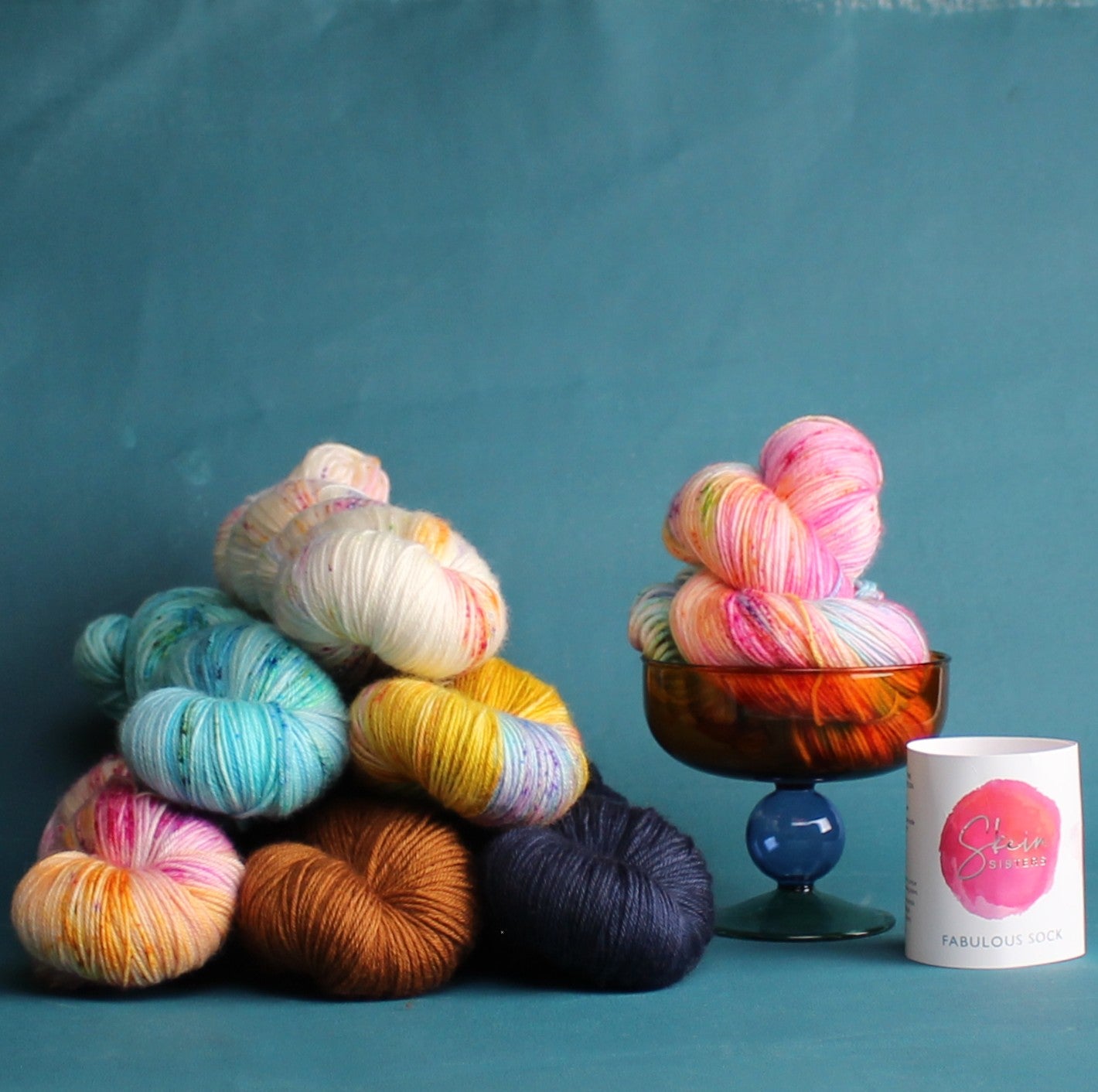
Our own Fabulous Sock is 80 per cent Australian extrafine superwash merino and 20 per cent nylon, 400m in a 100g skein, and it is hand-dyed here in our Dulwich Hill studio. It is what we hand most people who want to knit socks.
You'll hear mohair described as nature's nylon, and it does add strength. Our experience with mohair-blend sock yarns has been genuinely mixed – some customers report going straight through them, others love them and have had no trouble at all. How you walk and how you wear your shoes seems to matter more than anything else, so treat it as a personal experiment rather than a rule.
Browse our sock yarns with nylon in the blend to see the full range.
What if I want a pure wool sock?
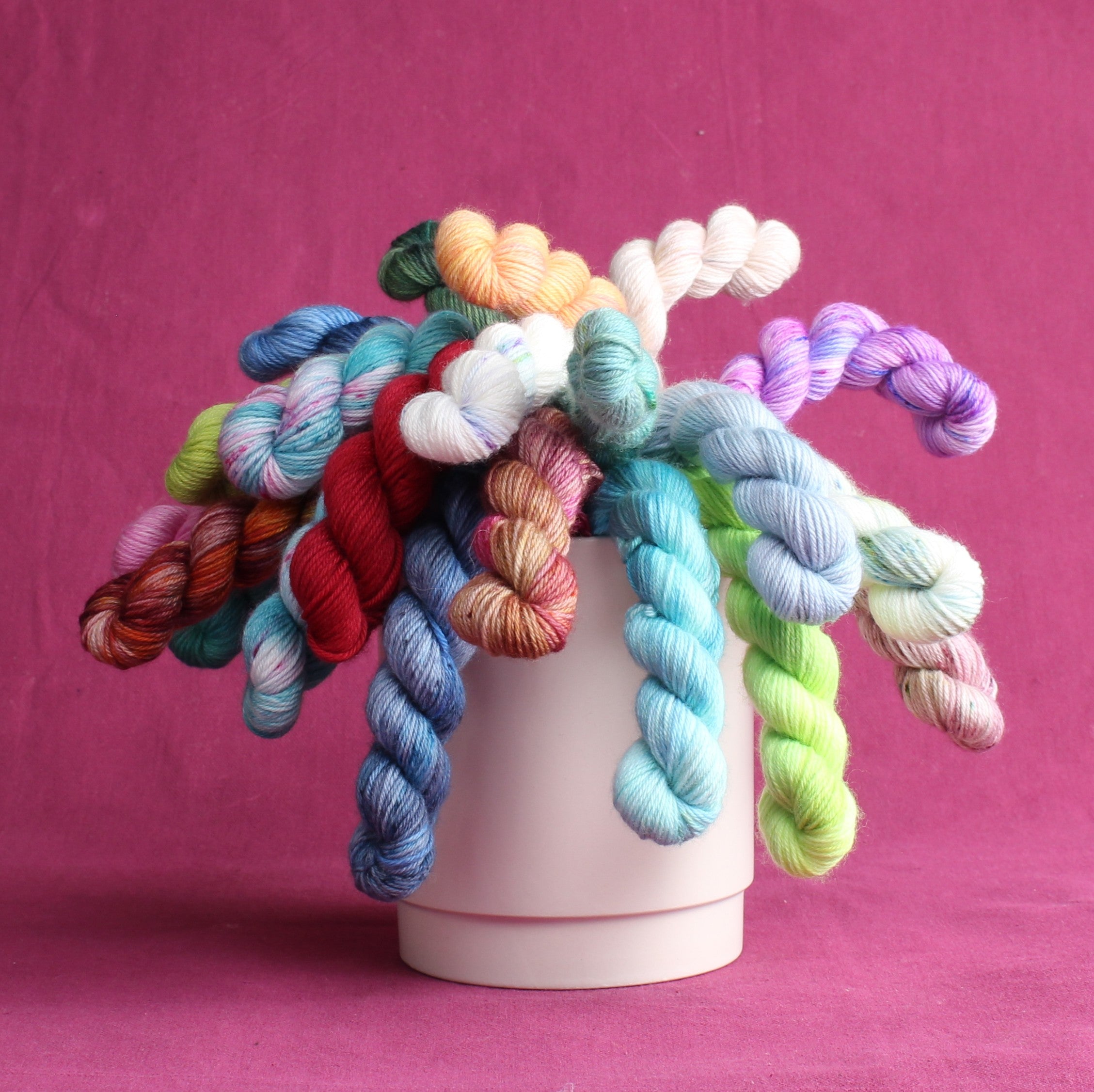
Plenty of people do, and you can. The trick is to reinforce where the wear happens: use a mini skein of a nylon-blend yarn for the heels and the toes, and knit the rest in your pure wool. Those are the two points that go first, and protecting them makes an enormous difference.
Choosing your first pattern
There are millions of sock patterns out there, which is wonderful and completely paralysing.
If small-circumference knitting in the round is new to you, start plain. A simple stocking-stitch sock lets you concentrate on the technique – the heel turn, the gusset, the toe – without a stitch pattern to track at the same time. There is a real satisfaction in a plain sock in a beautiful colour.
If you already knit comfortably and you know you get bored on a long plain stretch, do the opposite. Go straight for something with lace, or cables, or stripes. A bored knitter is a knitter with an unfinished sock in a bag.
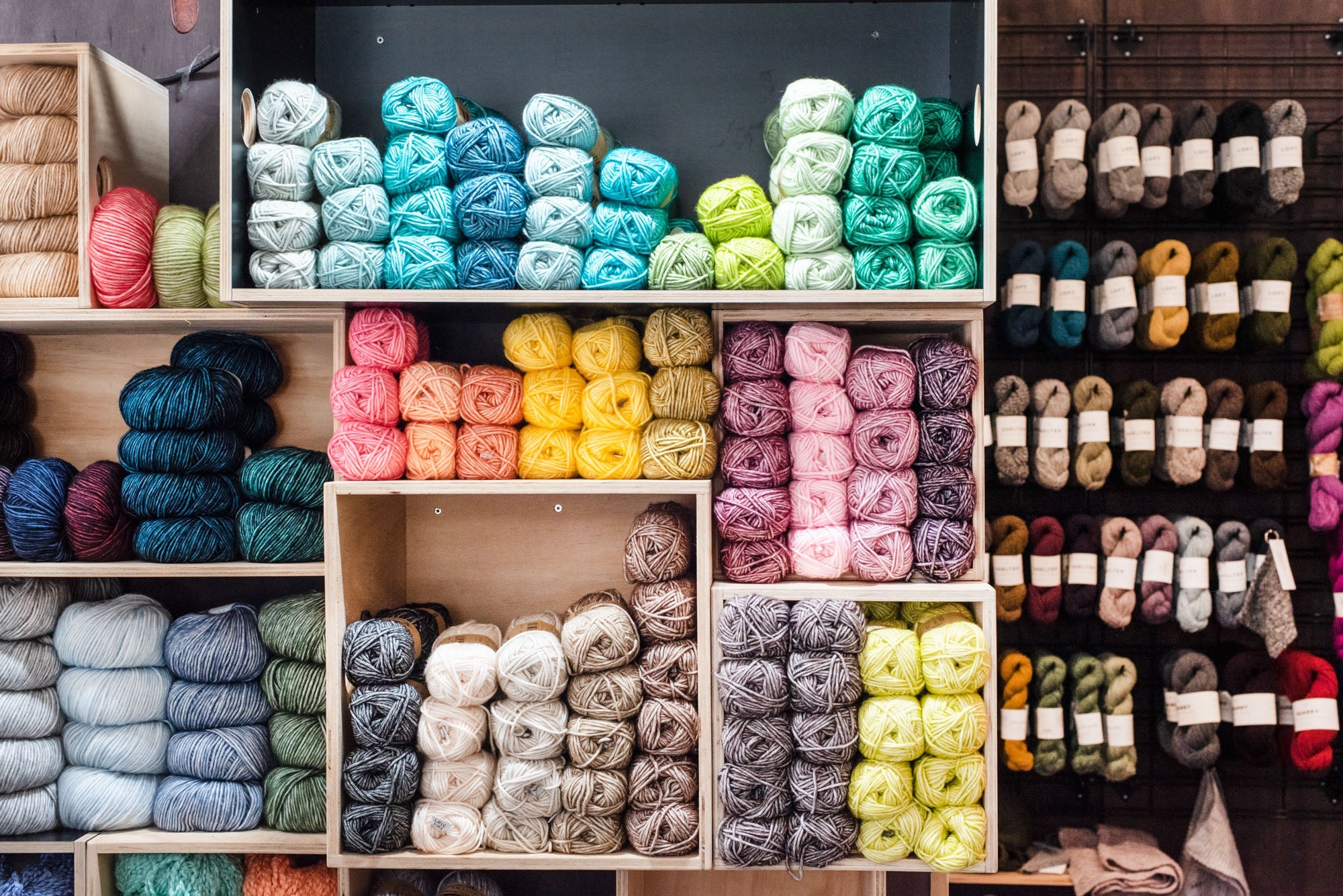
Have a look through our sock patterns and our sock yarn and see what pulls at you.
Olga's best advice for a first pattern is not about the heel at all - it is about choosing one that shows you what you are doing in photographs. More on that, and the pattern she points people to, in which sock heel should you knit.
Be braver with colour
This is my favourite thing about sock knitting and I don't think people take enough advantage of it.
Your socks live inside your shoes, under your trousers. Almost nobody sees them. So there is no reason at all to be sensible. Hand-dyed yarn is glorious for socks precisely because of what it does with colour – the speckles, the depth, the way a colourway shifts as you knit. Self-striping yarns are enormous fun and do all the work for you.
Be as wild as you like. It is the one garment where nobody gets a vote but you.

It doesn't have to be 4ply
Almost every sock pattern you meet is written for a 4ply, and that is what a shoe sock wants. But it is not the only option.
Our Poet is a merino, silk and nylon base, and we built it that way on purpose so you can knit a cosy chunky sock at an 8 to 10 ply gauge. And for bed socks or house socks, where nothing is rubbing against a shoe all day, you can use a much thicker yarn and you don't need the nylon at all.
There is a whole other post in yarns for socks, and we'll write it.
Washing your hand-knitted socks
We asked this on social media a while back and the answers were fascinating, mostly because everyone was certain and nobody agreed.
On how often to wash: the responses split almost exactly in half between washing after every single wear and wearing them a few times first. Wool has a real ability to breathe, so it doesn't hold on to smells the way other fibres do, and a lot of people take advantage of that quite happily.
My own marker is shape rather than smell. When they start to look a bit tired and stop springing back the way they did, they go in.
On machine versus hand, it was another even split. This is where superwash earns its keep. It means the yarn is treated so it can go through the machine without felting. That is why we generally point sock knitters at a superwash base. Fabulous Sock is superwash, so it goes in the machine on a delicate cycle and comes out fine. Dry flat, never in the dryer.
Some quick answers
How many skeins do I need for a pair of socks?
Usually one 100g skein of 4ply sock yarn. If you take a size 42 or larger, add a 20g mini for the heels and toes.
Do I have to use sock yarn with nylon in it?
For socks you wear in shoes, yes – we'd steer you there every time. Nylon is what stops the heel wearing through. For bed socks and house socks it matters far less.
Is toe up or top down better for a beginner?
Toe up is often easier to fit, because you can try the sock on as you go, and it takes the worry out of running short of yarn. Top down is the traditional method and many knitters find the heel fits them better. Both are worth learning.
Can I crochet socks?
You certainly can, and it deserves a post of its own rather than a line at the end of this one. Watch this space.
What size needles do I need?
Most 4ply sock yarn is knitted somewhere around 2.25mm to 2.5mm – tighter than you'd think. A firm fabric wears far better than a loose one.
Come and talk to us
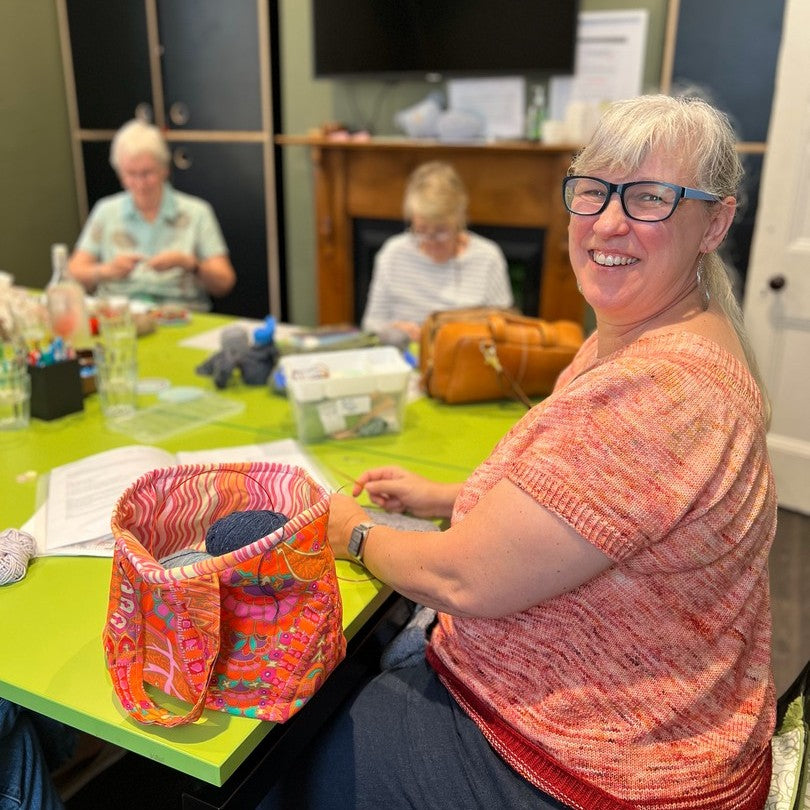
If you're standing in front of the sock yarn feeling a bit overwhelmed, come and find one of us. Between the team we have knitters who have made more pairs of socks than they can count, and there is nothing we like better than pointing someone at their first pair.
And if you get halfway through the first sock and something has gone strange at the heel, that is exactly what the Sisters' Help Clinic is for. Bring it in. We have all been there.
Much love and happy making,
Debx