If you've ever stood in front of a gorgeous pattern, ready to cast on, only to be stopped cold by the words 'worsted weight' when your yarn says '10 ply' – you are in very good company. It's one of the most common questions we're asked in the shop, and there's nothing wrong with you or the pattern.
Australia and the UK just speak a slightly different yarn language to the rest of the world. So let's clear it up once and for all. Pour a cuppa, and by the end of this you'll be able to read any pattern from anywhere with confidence – whether you knit or crochet.
The short answer: Australian and UK patterns describe yarn by ply (4 ply, 8 ply, 10 ply), while American and many modern patterns use weight names (fingering, DK, worsted) – two names for the same thing. The quick translation:
- 4 ply = fingering / sock
- 5 ply = sport
- 8 ply = DK
- 10 ply = worsted / aran
- 12 ply = bulky / chunky
And yes – 8 ply is the same weight as DK.
The yarn weight conversion chart
Here's the whole picture in one place. Think of it as a translation guide, not a rulebook. A ball band may suggest a needle size, but in practice the pattern – and the effect you're after – decides which needle (or hook, if you're working crochet) you actually reach for. The very same 4 ply sock yarn might be knitted on 2.25 – 2.75 mm for firm, hard-wearing socks, or on 3.5 – 4 mm for a soft, drapey shawl. So treat the needle sizes below as a friendly starting point, not a rule.
| Australian ply | Weight name (US / UK) | Common needle/hook range | Length per 100g |
|---|---|---|---|
| 2 ply | Lace | 1.5 – 2.25 mm | 600 – 800 m |
| 3 ply | Light fingering / heavy lace | 2.25 – 3.5 mm | 400 – 500 m |
| 4 ply | Fingering / sock | 2.25 – 4.0 mm | 365 – 425 m |
| 5 ply | Sport | 3.0 – 4.5 mm | ~300 m |
| 8 ply | DK (double knit) | 3.75 – 4.5 mm | 200 – 250 m |
| 10 ply | Worsted / aran | 4.5 – 5.5 mm | 170 – 200 m |
| 12 ply | Bulky / chunky | 5.5 – 6.5 mm | 120 – 150 m |
| 14 ply | Super bulky / chunky | 6.5 – 10 mm | 80 – 120 m |

So what does 'ply' actually mean?
This is where it gets interesting, because the word 'ply' is quietly doing two different jobs. Every yarn has two separate properties: how thick it is, and how many plies – strands – are twisted together to make it.
In Australia and the UK, we've borrowed 'ply' to describe thickness, so '8 ply' simply means a yarn of a certain heft. But in yarn construction, 'ply' has its older, more literal meaning: the actual number of strands twisted together, no matter how thick or thin the finished yarn turns out. A fine, lace-weight yarn might be built from four twisted strands – a true '4-ply construction' – while still being a 2 ply in thickness. And that number of strands quietly shapes how a yarn behaves: its roundness, its stitch definition, how it wears over time.
So when an Australian or UK pattern says a ply, it's almost always talking about thickness – use the chart above as your translator, and don't try to count the strands.
One more thing: not all '8 ply' yarns are the same
Even within a single thickness, yarns vary – there are lighter DKs and heavier DKs, and the gaps grow as the yarn gets thicker. It's especially true at 10 ply, where 'worsted' and 'aran' both live: aran is genuinely heavier than worsted, while a worsted can sit light enough to stand in for a DK. (We'll often knit a DK pattern in a worsted – just checking the tension first.) So don't assume two yarns wearing the same label will behave identically.
A quick way to compare is wraps per inch (WPI): wrap the yarn snugly around a ruler and count how many wraps fit in an inch. The finer the yarn, the more wraps.
| Weight | Approx. wraps per inch |
|---|---|
| 2 ply / lace | 18+ |
| 3 ply / light fingering | 16 – 18 |
| 4 ply / fingering / sock | ~14 |
| 5 ply / sport | ~12 |
| 8 ply / DK | ~11 |
| 10 ply / worsted / aran | 8 – 9 |
| 12 ply / bulky | ~7 |
| 14 ply / super bulky | 5 – 6 |
Ultimately, the surest test is to knit a small swatch and feel how the yarn behaves in your hands. Numbers are a guide – your swatch is the truth.

A quick tour of each weight (and what to make)
2 – 3 ply / lace – delicate and dreamy
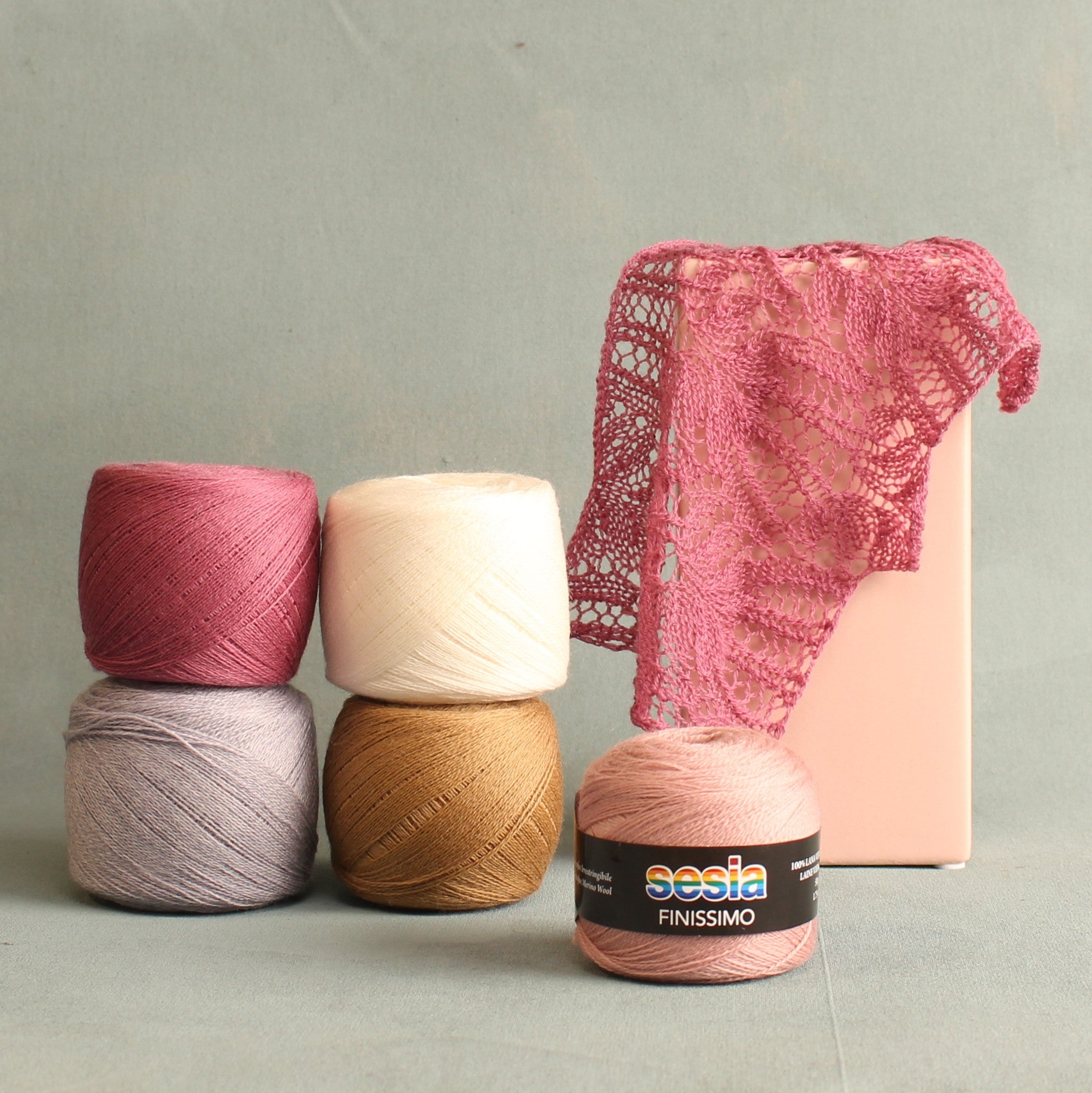
The finest of the fine, for heirloom shawls and featherlight wraps. Sesia Finissimo Lace and Bonnie's Daughter Eri Silk are worth a look when you're feeling ambitious. A fine mohair such as Kremke Silky Kid also lives down here – beautiful on its own, or held alongside another yarn for a soft halo.
4 ply / fingering / sock – the Skein Sisters heartland
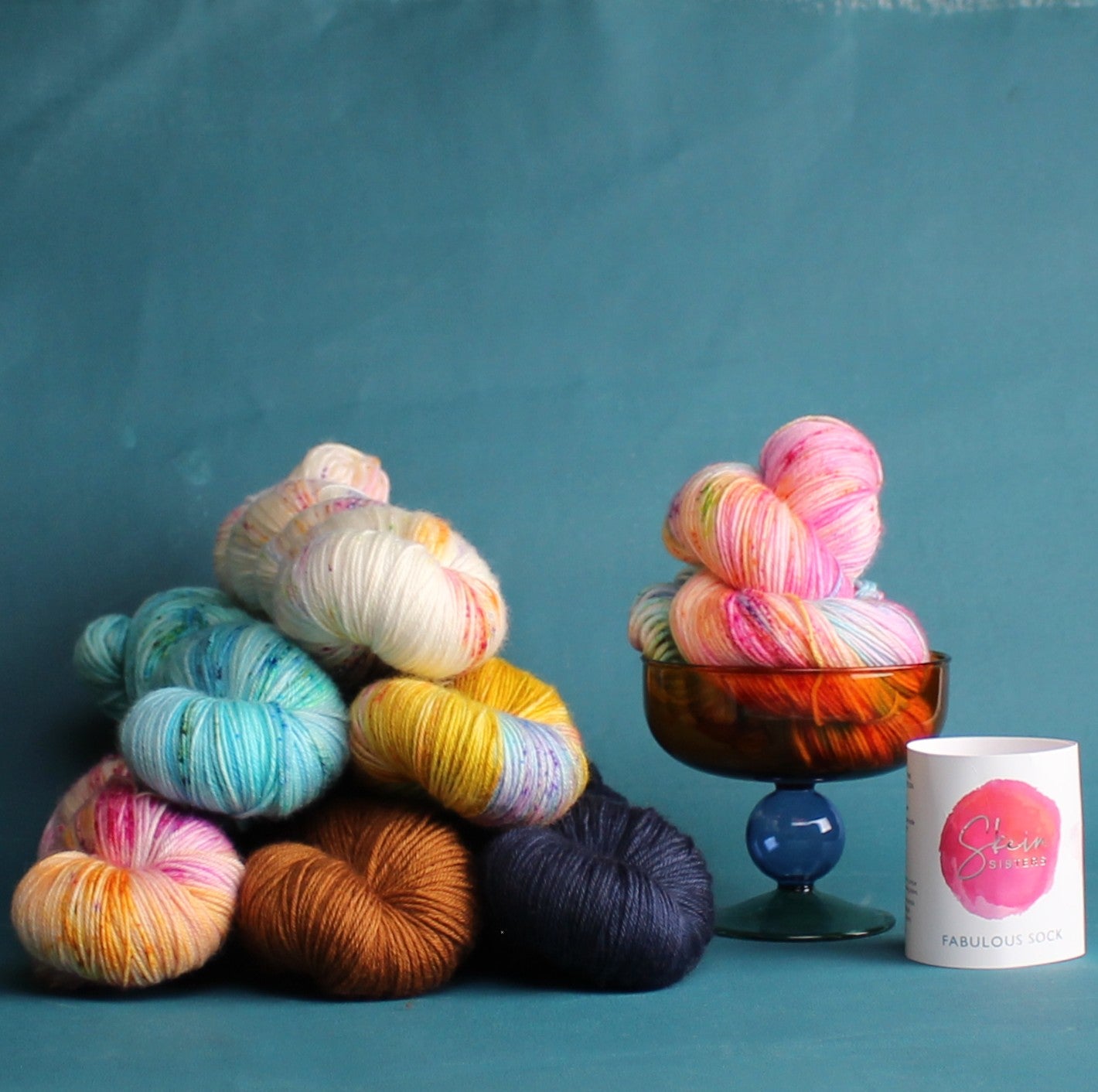
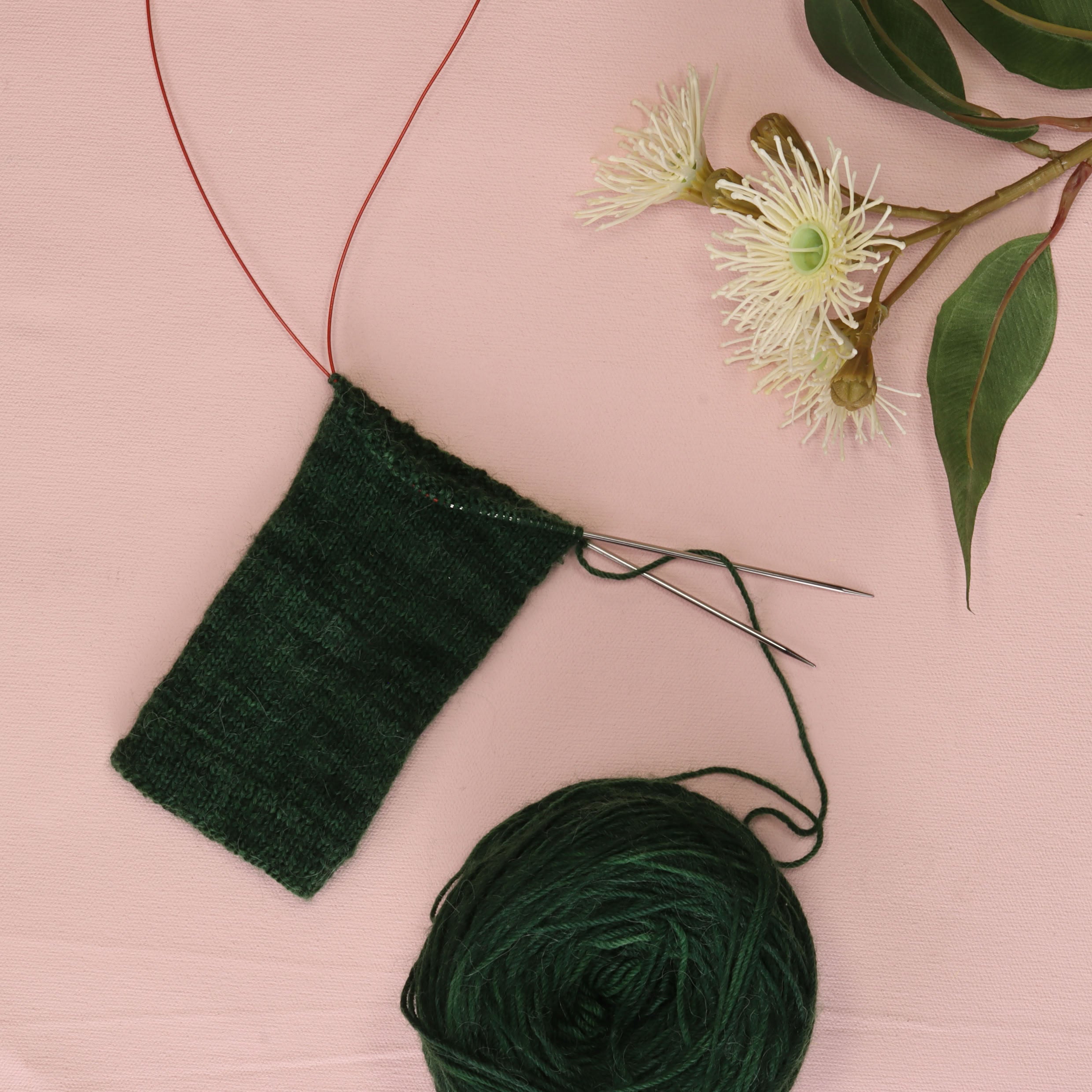
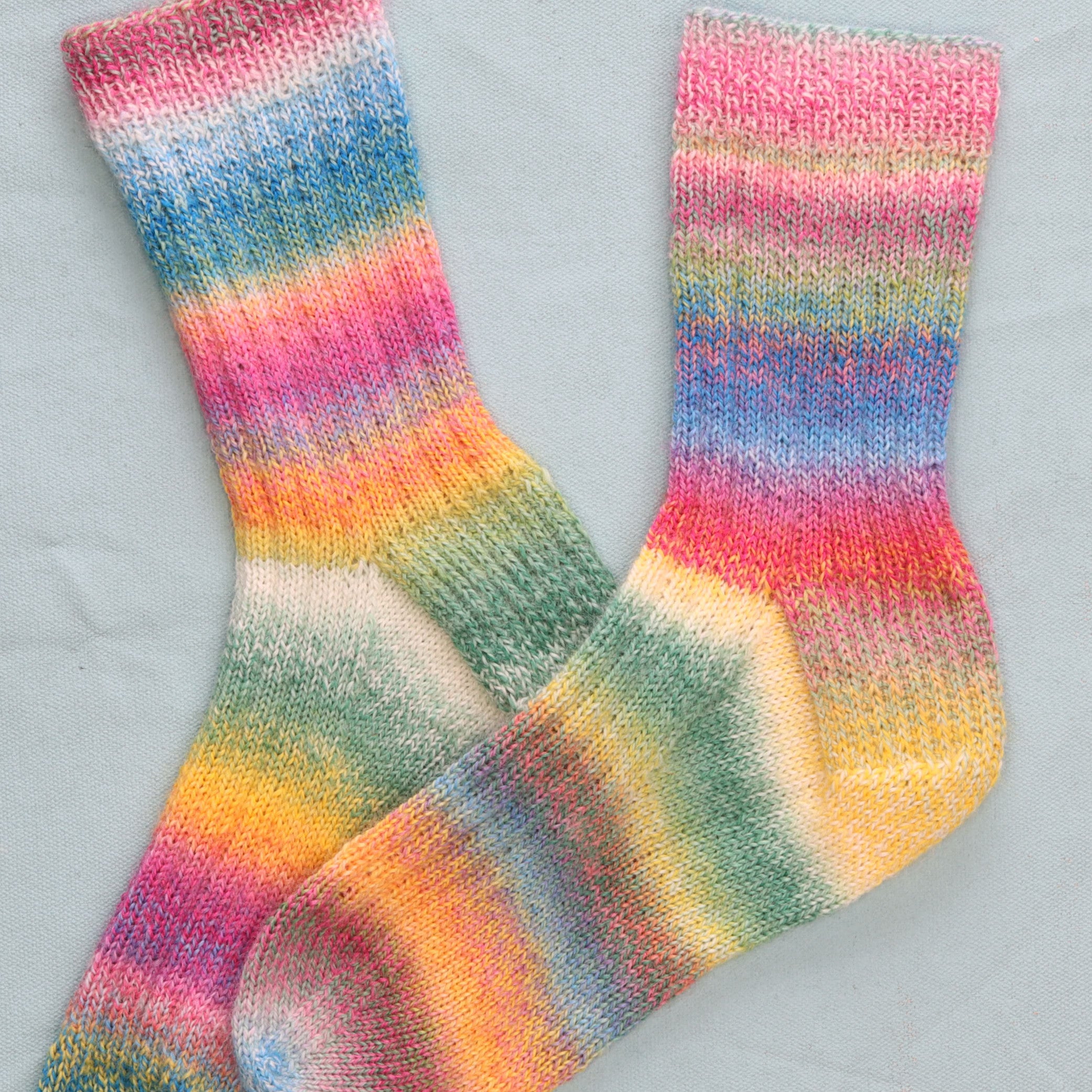
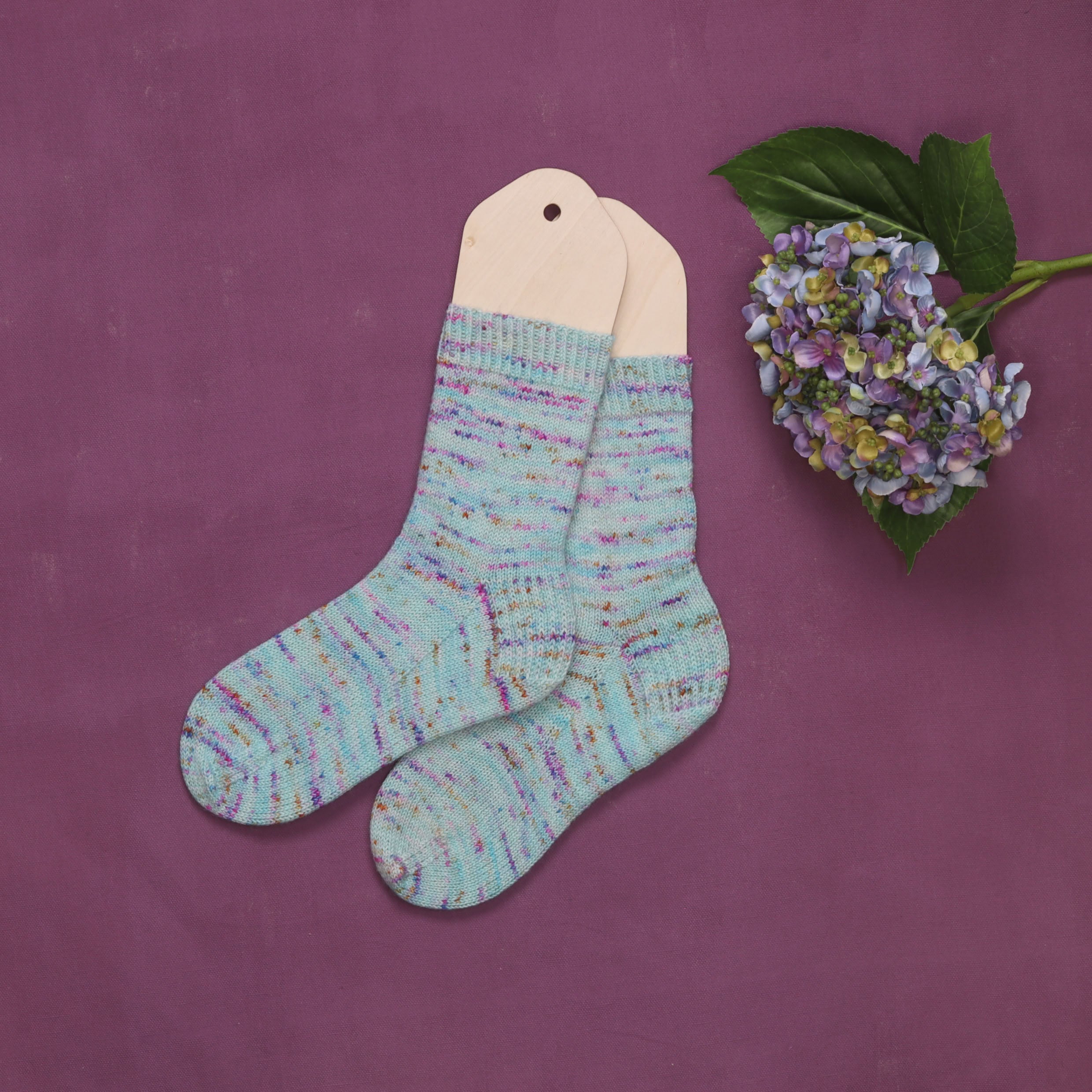
Fine, hard-wearing and endlessly versatile – the home of socks, shawls, fine jumpers and colourwork. Our own hand-dyed Fabulous Sock lives here (80% Australian superwash merino, 20% nylon, 400 m per 100 g), alongside Romance and Fiddlesticks Peppin 4. Worth knowing too – 'fingering' and 'sock' are essentially the same weight; the word 'sock' usually just signals there's a little nylon in the blend to help it wear well underfoot.
5 ply / sport – the lovely in-between
The joy of a 5 ply is exactly that – it's the in-between. It knits up noticeably quicker than a 4 ply, so a beautiful garment is off the needles sooner, with a little more warmth and substance. Fiddlesticks Cedar is a lovely example: it happily plays as a 5 ply or a light 8 ply, just that bit heavier and with a gorgeous feel in the hand. Life in the Long Grass Sport Merino is another to reach for.
8 ply / DK – the everyday workhorse
If a pattern just says 'DK', this is your aisle. Quick to knit and brilliant for jumpers, cardigans, beanies and blankets. Look at Bellissimo 8, Fiddlesticks Peppin 8 or Woolly 8ply.
10 ply / worsted / aran – cosy and fast
Warm, satisfying and speedy on the needles. Worsted and aran live together here, but they're not identical – aran is genuinely the heavier of the two, so it's worth knowing which end your yarn sits at. Our 10 ply Poet, Fiddlesticks Peppin 10 and Finch are all in this family.
12 – 14 ply / bulky, chunky & super bulky – instant gratification
Big yarn, big needles, finished-by-the-weekend energy – wonderful for cosy winter accessories and statement jumpers. Try Donegal Chunky, Fiddlesticks Peppin 14, Fiori Grande or Super Woolly.
Match the weight first, then check your tension with a swatch.
Why this matters when you buy or substitute yarn
Getting the weight right is the single biggest thing that decides whether your finished piece fits and feels the way the designer intended – for knitters and crocheters alike. If a pattern calls for DK and you knit it in 4 ply, you'll end up with a smaller, denser fabric – and a lot of frustration. Match the weight first, then check your tension with a swatch.
If you'd like a hand translating a pattern or finding the right yarn for it, that's one of our favourite things to do – just ask us in the shop, pop into our Help Clinic, or send us a message. We're always happy to help you get it right before you cast on.
Shop the yarns in this guide
Fabulous Sock · 4 ply | Romance · 4 ply | Peppin 8 · DK | Poet · 10 ply | Super Woolly · 14 ply
Frequently asked questions
Is 8 ply the same as DK?
Yes. Australian 8 ply and DK (double knit) are the same weight and are used interchangeably. A 4 mm needle suits both as a starting point.
What is 4 ply equivalent to in US patterns?
4 ply is the same as US fingering or sock weight. Australian 4 ply, UK 4 ply and US fingering all describe the same fine yarn.
What needle size do I use for 10 ply?
Most 10 ply (worsted/aran) yarns knit up well on 4.5 – 5.5 mm needles, but always check the ball band and your own tension.
Why doesn't the ply number match the number of strands?
Because modern yarn is spun in many different ways. Ply is now a thickness label rather than a literal strand count, so a '10 ply' may not contain ten separate strands.
Is sock yarn the same as 4 ply?
Largely, yes. Sock yarn is almost always a 4 ply / fingering weight – the word 'sock' usually just means there's some nylon in the blend so it wears well underfoot. It's lovely for shawls and other fine knits too.
Happy making, and remember – there's no such thing as a silly yarn question. We're always here to help.
Debx