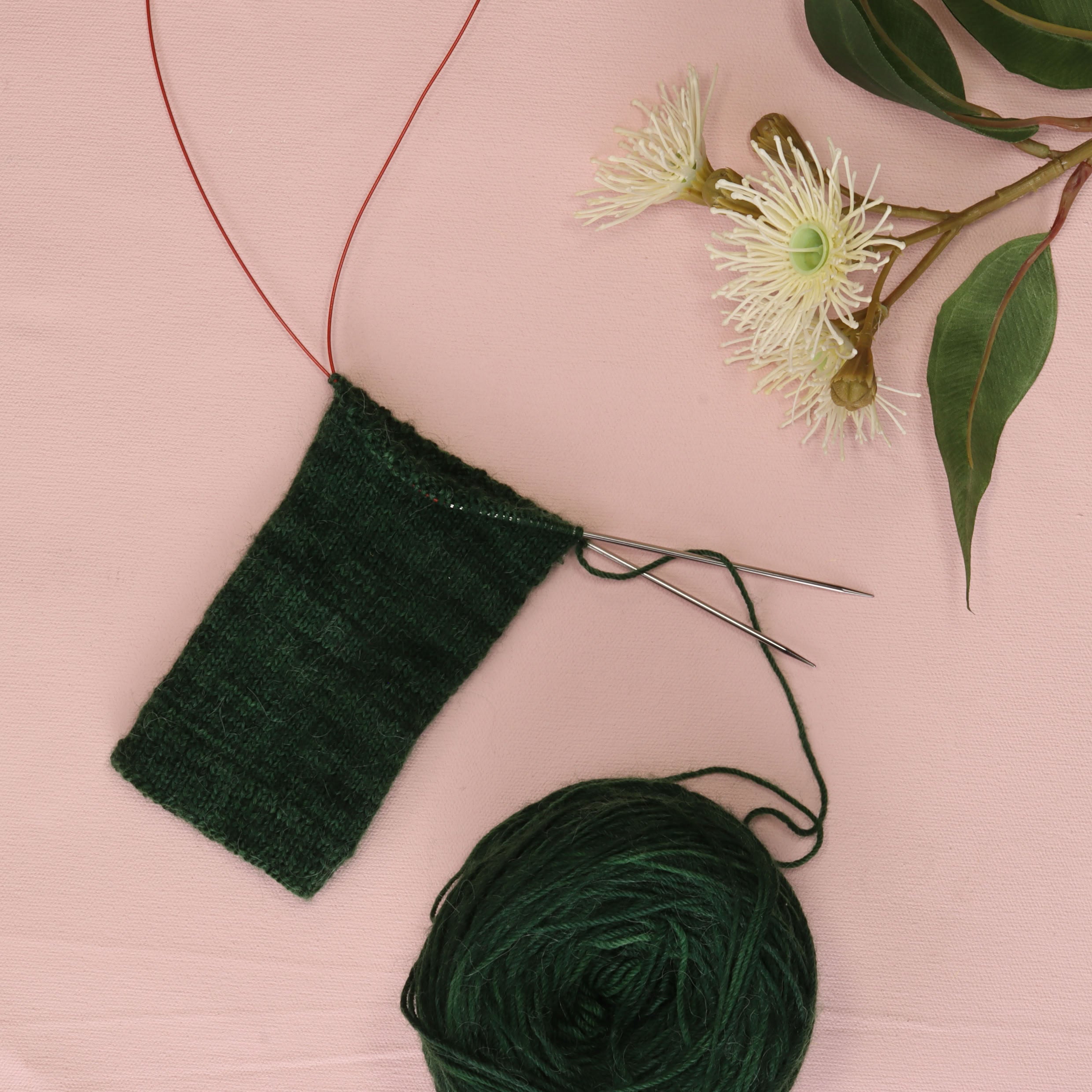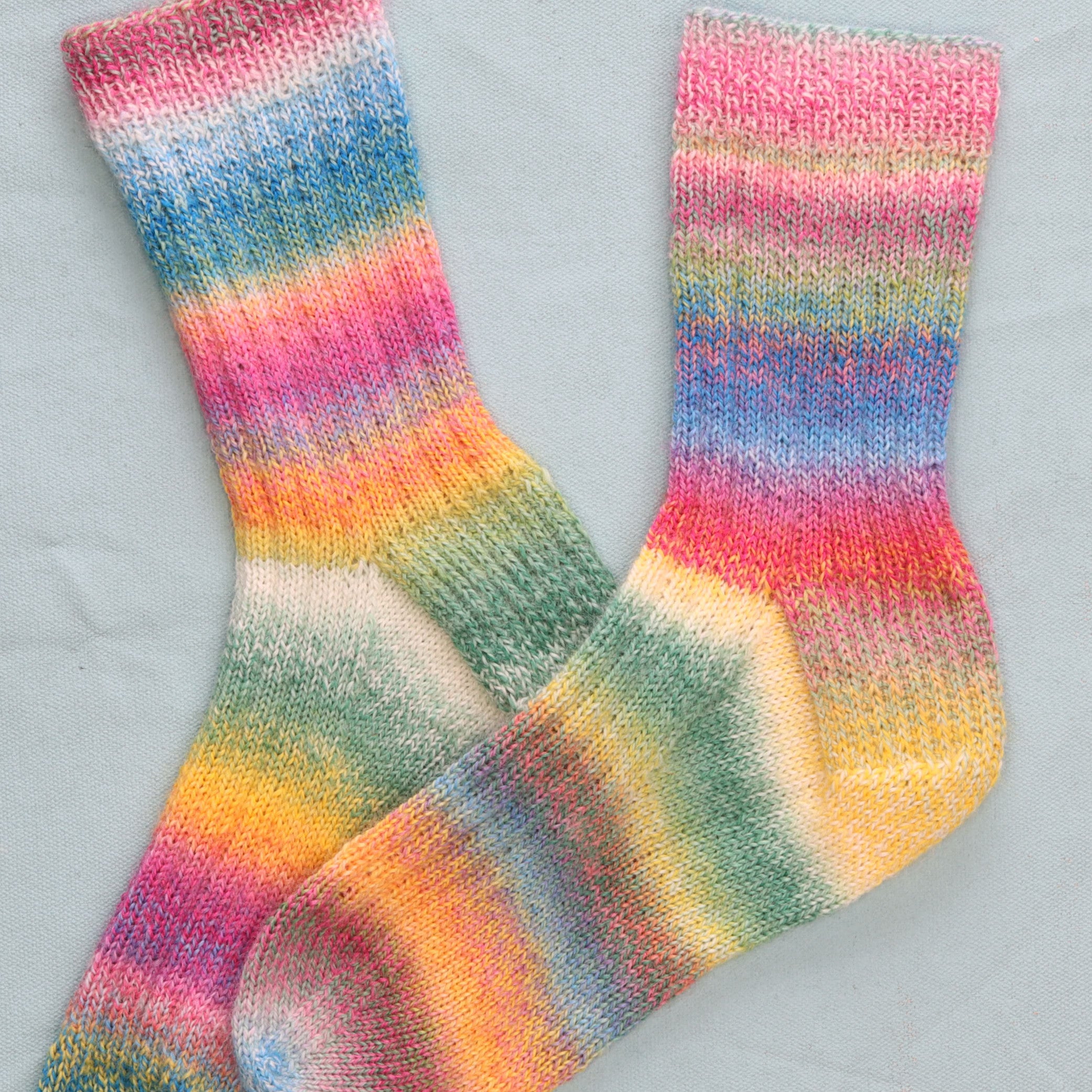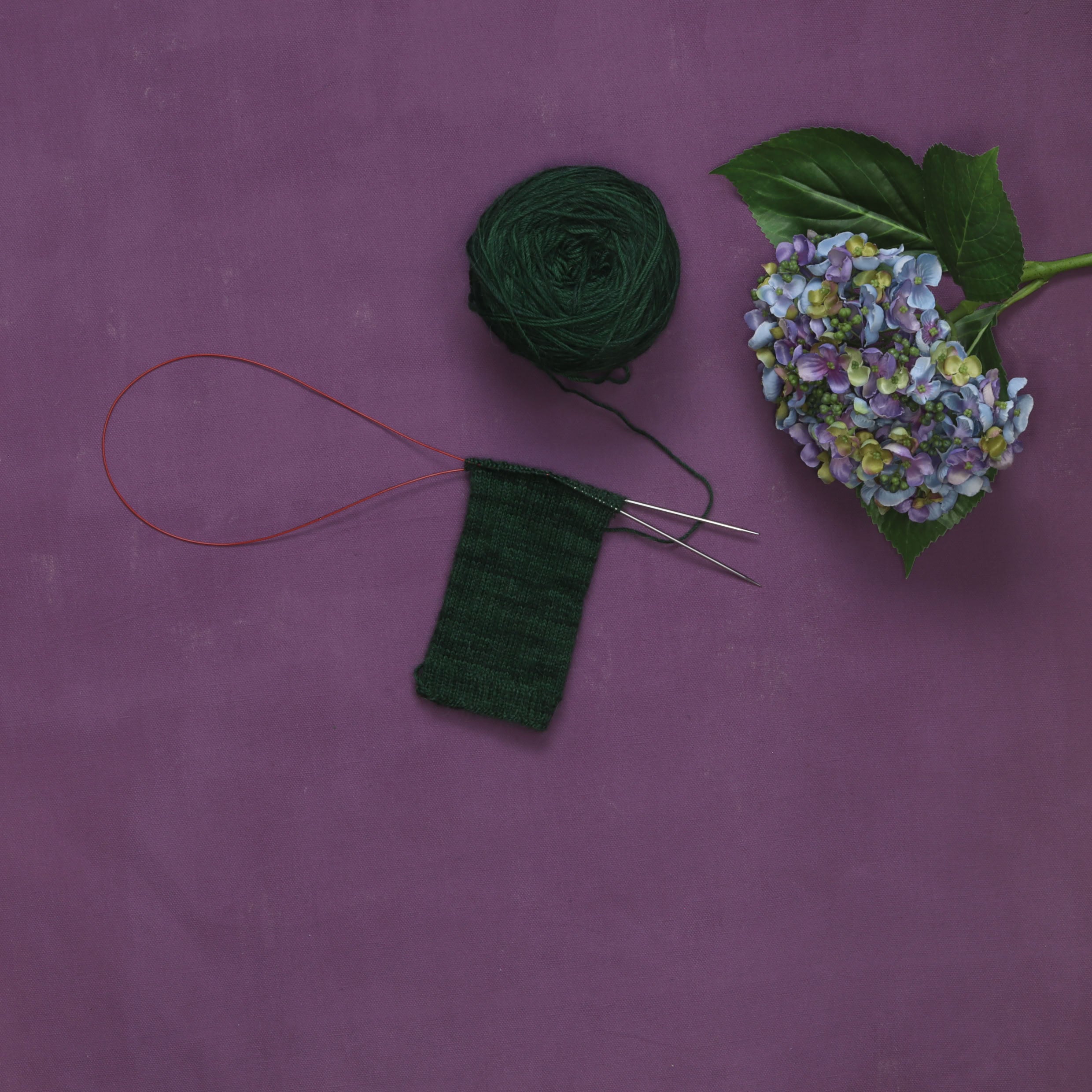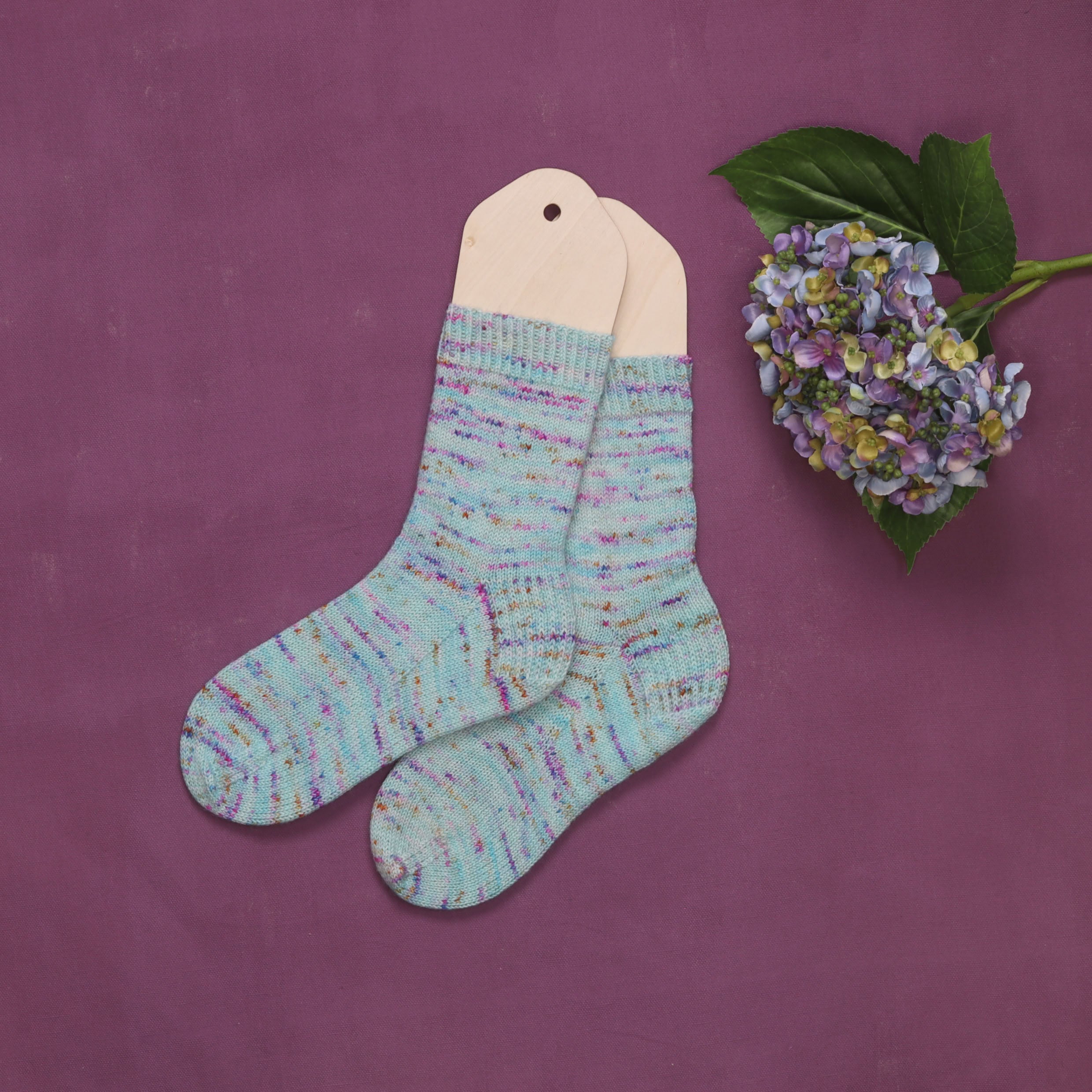
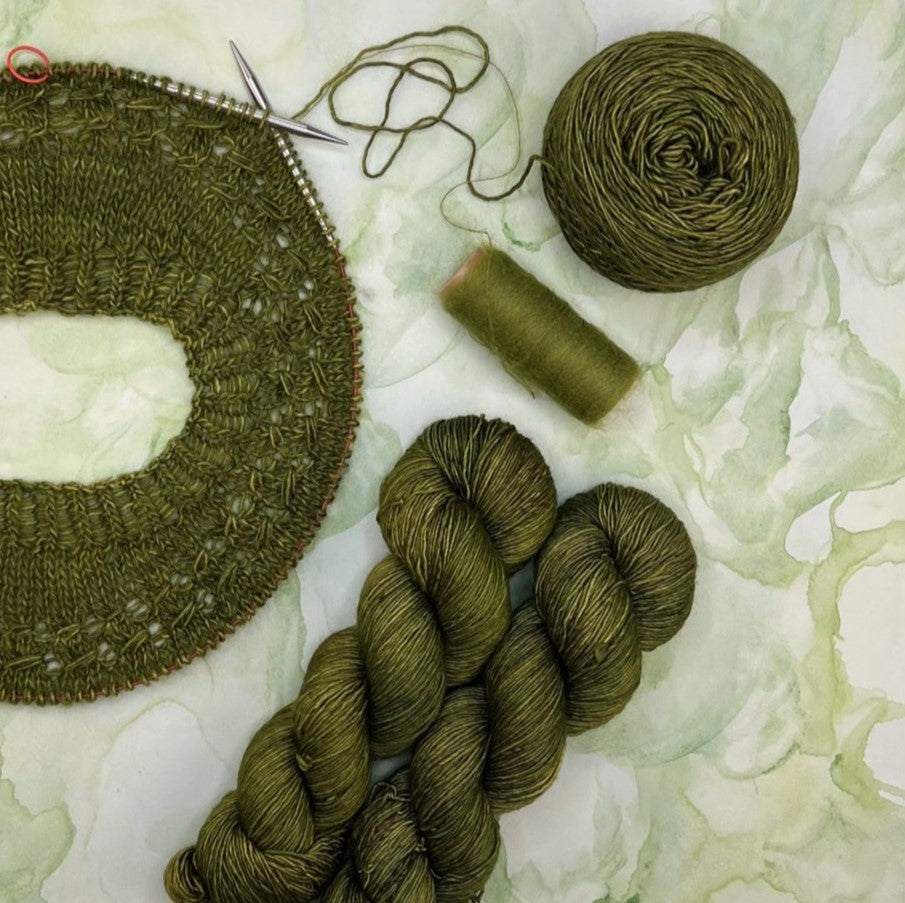

Above: the start of Deb's Ranunculus sweater using Skein Sisters Romance in Olive You and Katia 50 Mohair Shades
Yarn balls vs skeins – exploring the differences
Today, we’re diving into a topic that lots of our customers often ask us: what’s the difference between yarn sold in balls and yarn sold in skeins and why do they come in both these forms?
The answer includes several factors. To start with, yarn balls are typically produced in commercial mills with specialised, expensive and large equipment, out of reach of small yarn companies. Making skeins is a more accessible format for small, independent dyers and yarn producers. There is also a perception of quality with yarn displayed in a skein plus they look gorgeous hanging in our shop! Let’s look at balls and skeins in more detail.
What is a Yarn Ball?
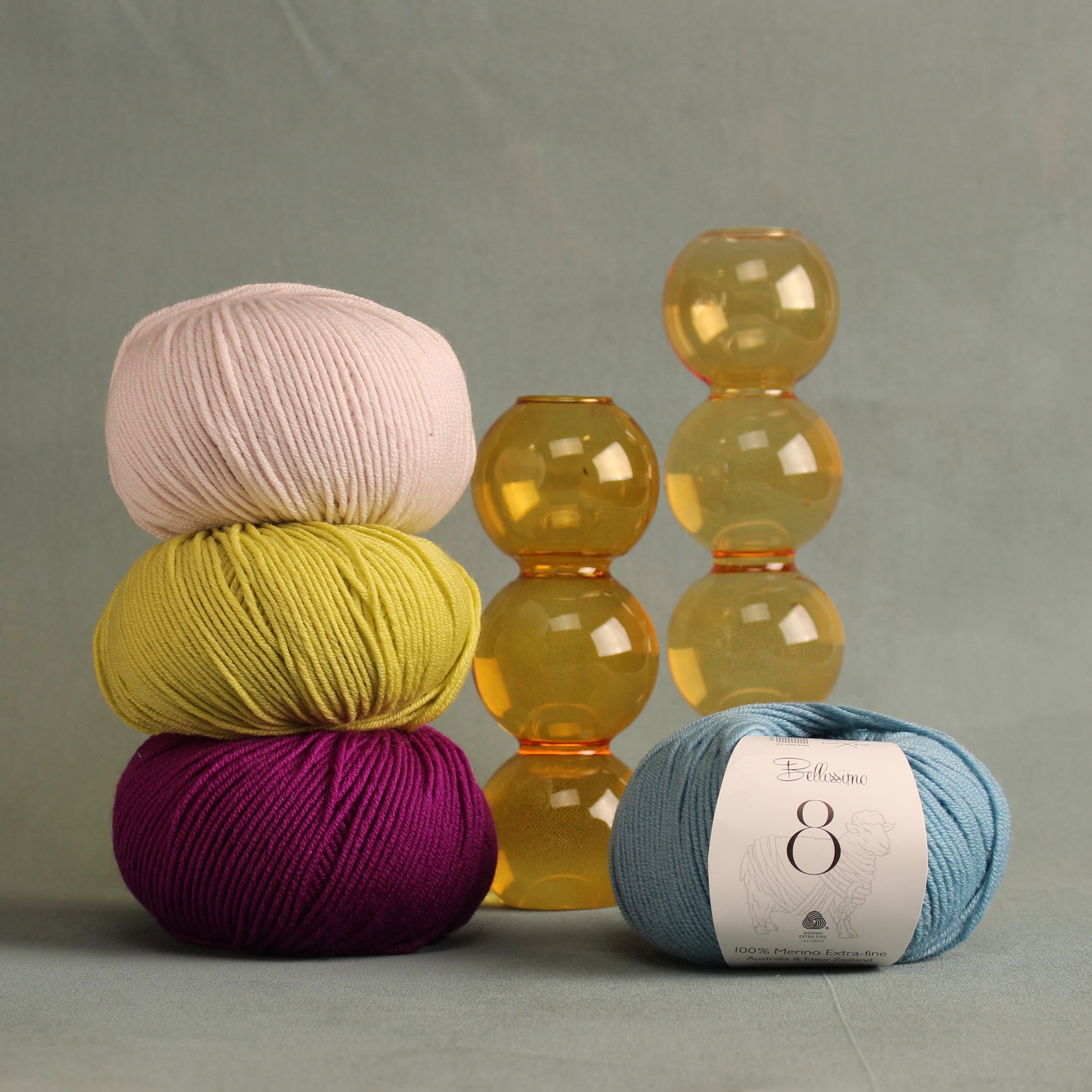
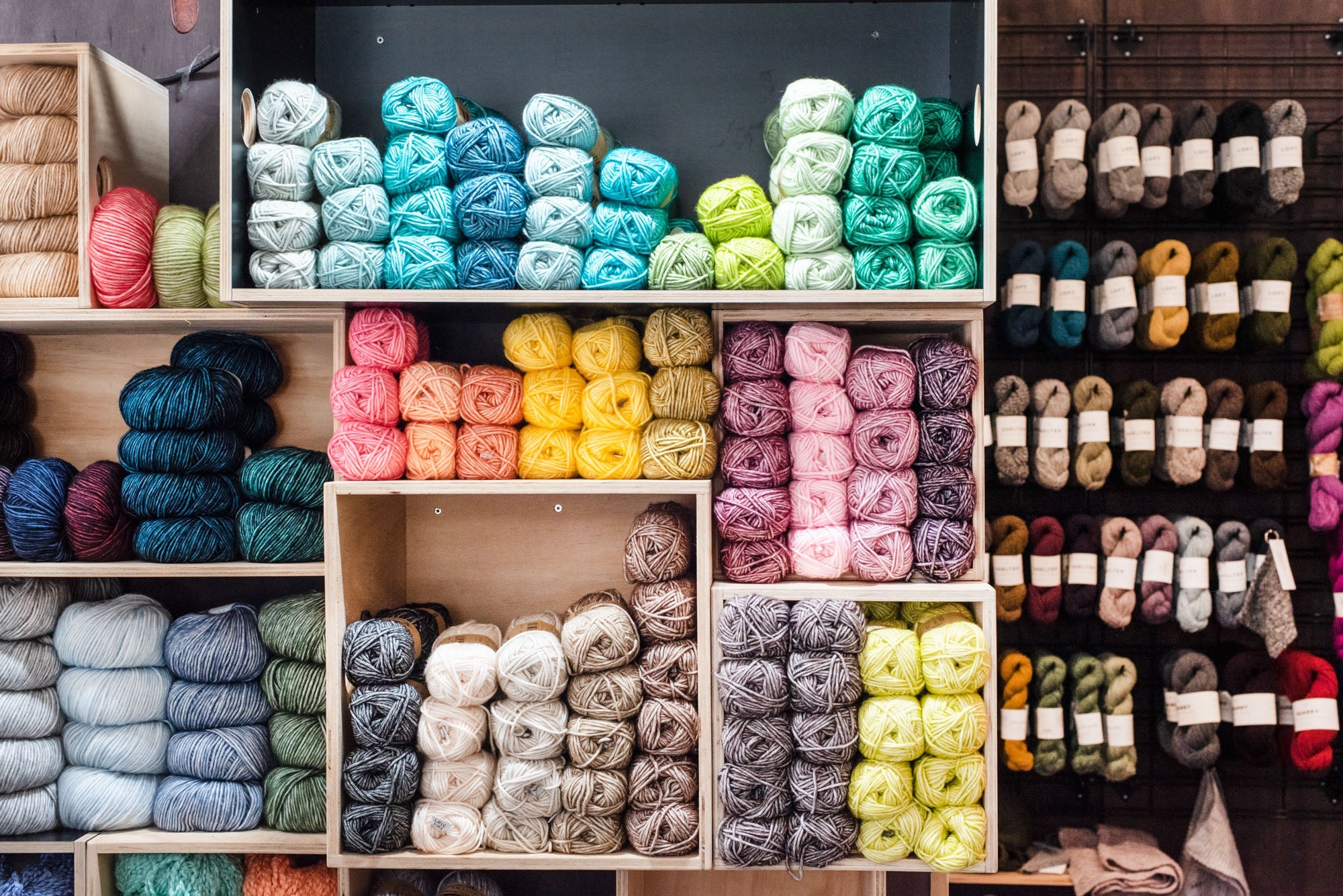
A yarn ball is precisely what it sounds like—a bundle of yarn wound into shapes including spheres, ovals and cylinders. This format is compact and easy to handle. When you purchase yarn in a ball, you can start to use it immediately. Here are some key characteristics of yarn balls:
Convenience: Balls are often preferred for their grab-and-go nature. They are unlikely to tangle.
Ease of Use: Beginners find balls easier to work with since they don’t need to wind the yarn before use.
Portability: The round shape makes it easy to throw into a project bag and take your crafting on the go.
Type of yarn: Many commercially produced yarns come in balls as the mills have the expensive, specialised equipment required to wind the yarn into the ball


Above left: Bellissimo and Fiddlesticks yarns come in balls. Above right: Fiddlesticks Finch cotton is produced in cylinders of yarn.
What is a Skein?
A yarn skein is a loop of yarn bundled together and then twisted to form a cylindrical shape. There are several reasons why skeins come in this format rather than balls: This format is used for hand-dyed yarns. Additionally, skeins are often perceived as higher quality compared to other formats. Here are some key aspects of yarn skeins:
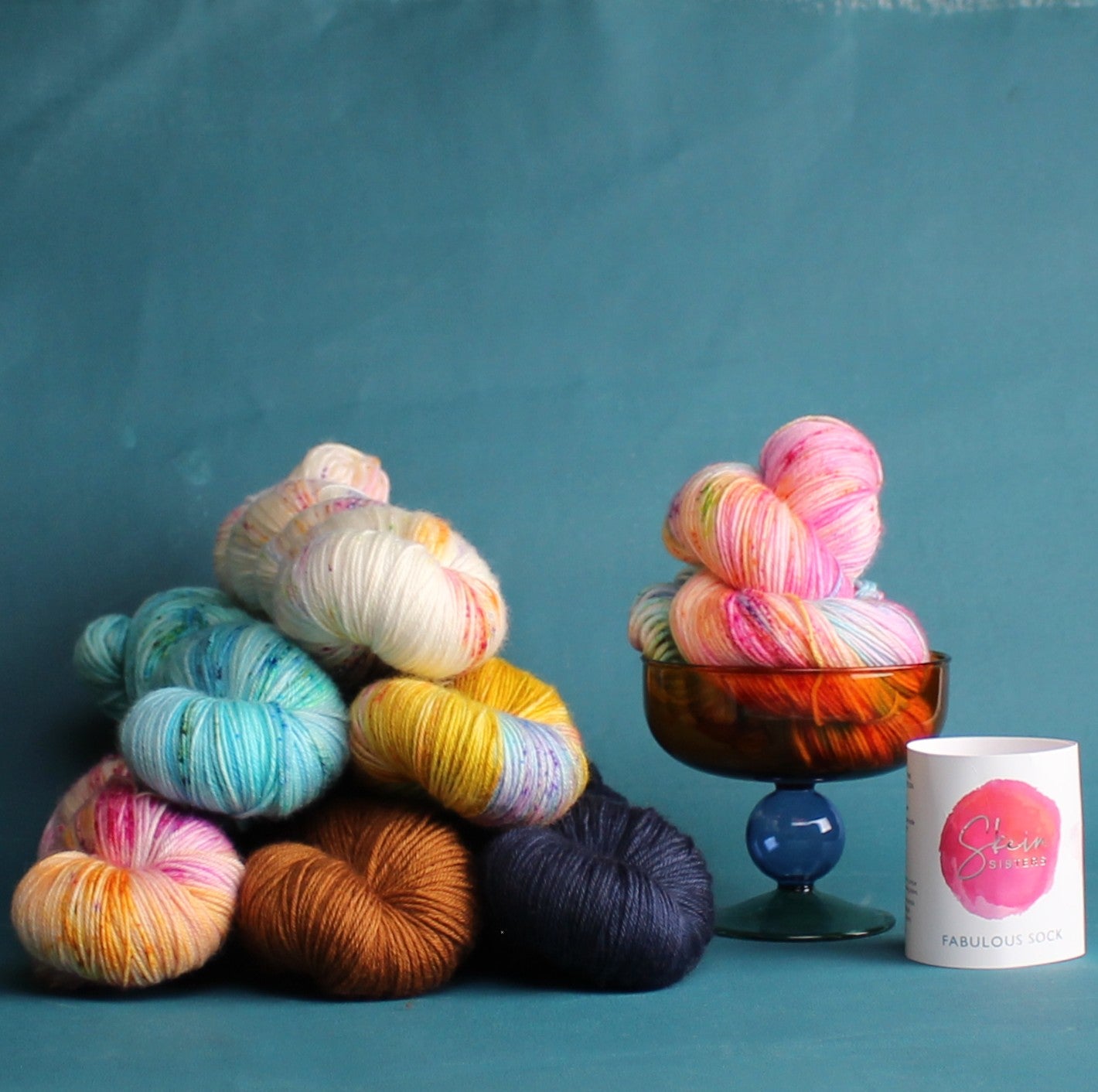
Hand Dyeing Process: All hand dyed yarn, such as our Skein Sisters Fabulous Sock, comes in skeins and there are a couple of reasons for this. Many (most!) hand-dyers are small, independent businesses and do not have the space or the money for the very expensive equipment required to turn yarn into balls. When hand dyeing, the untwisted skein of yarn is placed into a dye bath to allow for even dye distribution and the colour applied using various methods. Once the dye is applied, the yarn is dried and then easily twisted, either by hand or using a simple twister, into the skein.


Above left: Julia, our head dyer, creating magic in her dye pans. Above right: Drying Skein Sisters Romance in Fruit Tingle.
Visual beauty: A hand dyed skein looks most beautiful displayed in a skein, where you can see all the colours added to the yarn in the dyeing process.
Quality Perception: There is an association that skeins are artisanal, high-quality yarn.
Commercial Equipment: Yarn balls are typically produced in commercial mills with specialised, expensive equipment, making skeins a more accessible format for small, independent dyers and yarn producers.
Yarn that comes in skeins includes:
- Skein Sisters Fabulous Sock
- Madelinetosh Tosh Merino Light
- Miss Babs Yummy 2-Ply
- Spincyle Yarns Dyed in the Wool


Can you knit directly from a skein?
No, you can’t! Unlike yarn balls, you cannot knit or crochet directly from a skein. It must be wound into a ball before use or you’ll end up with a terrible tangled mess of yarn. Here are a few ways you can turn your skein into a ball:
- We can do it for you – simply add Yarn Winding to your cart before you Checkout and we can wind the yarn in store before we send it to you.
- Wind the yarn by hand at home. One person can hold the skein between their hands while a second person winds the yarn into the ball. If you don’t have a helper, you can also put the yarn onto the back of a chair or around a large cushion to hold it while you wind. Check out our Youtube video to see one way of winding your yarn.
- Purchase your own swift and/or ball winder. The swift holds the yarn in place while you either wind it by hand, or use a ball winder to create your yarn ball. We have various models available for you to have at home. You can find all our winding tools here.
We hope this clears up any confusion and helps you make informed choices for your next knitting or crochet project!
Happy crafting!
Debx